
Views: 46 Author: Monica Publish Time: 2026-03-25 Origin: Site


Tube steel distortion is one of the most common and frustrating problem. Even slight warping, bending, or twisting—such deformations will affect your usage.
The good news is that Tube Steel deformation can be addressed and prevented. This article draws on decades of metal knowledge and processing experience to help you correct and prevent Tube Steel deformation.

Distortion in Tube Steels arises from internal stresses, uneven heating, mechanical forces, or improper handling.
Thermal Stress: During welding or heat treatment, the steel expands and contracts unevenly. Stainless steels and nickel alloys are particularly susceptible to this because they have lower thermal conductivity and higher thermal expansion rates than carbon steel. The heat stays concentrated in the weld zone longer, and the "pull" during cooling is more aggressive.
Mechanical Stress: Improper bending, pressing, or rolling techniques can introduce residual stresses that later manifest as permanent deformation.
Improper Fixation: When Tube Steels are inadequately clamped during machining or welding, even minor thermal or mechanical forces can lead to significant misalignment.
Material Properties: Certain stainless steels, especially austenitic grades, have a high tendency to distort due to their inherent elasticity and work-hardening characteristics. Nickel alloys, while more resistant to corrosion, are also prone to stress-induced warping if not handled correctly.
Thickness and Shape: Thin-walled tubes are inherently more flexible and susceptible to bending. Similarly, longer lengths of tubing can distort more easily due to cumulative stress along their span.
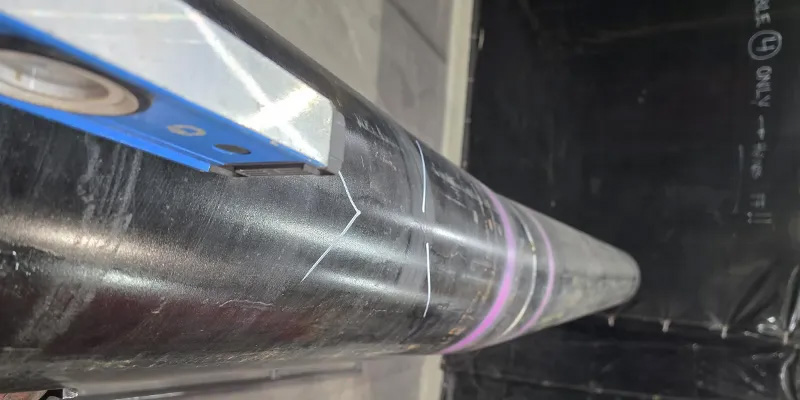
First, use alignment tools to measure the degree of bending to determine whether the Tube Steel is locally deformed or deformed throughout. Check the pipe for cracks or thinning.
For minor bends or elliptical cross-sections, straightening can be done using a hydraulic press or rollers. Use appropriate molds and apply pressure slowly. For square or rectangular pipes, C-clamps with pads can be used for fixation. For stubborn deformations that are difficult to straighten, our technicians often use a combination of mechanical force and light heating on the opposite side of the deformation.
Apply localized heating to the convex side of the bend. The heated area expands and then contracts during cooling, pulling the pipe back to its center position. Experienced professionals can quickly restore the pipe to its original shape.
For pipe sections deformed due to welding, a weld can be built on the opposite side of the deformation to generate equal and opposite shrinkage stresses. After welding, the weld should be ground flush with the pipe wall. This technique is particularly suitable for applications where complete disassembly and repair are not possible due to difficulties in disassembly.
If the Tube Steel exhibits severe cross-sectional ellipticization, cracks, or repeated deformation, it is generally recommended to cut off the damaged section and replace it with a completely new Tube Steel.
The following are the most practical and reliable on-site operational steps, capable of reducing deformation in your Tube Steels by approximately 90%.
1. Preparation Phase:
Prioritize low-carbon or stabilized stainless steels—such as 304L or 316L—rather than selecting standard 304 or 316 grades.
Upon receiving the Tube Steels, use a straightedge or laser alignment tool to measure them, ensuring that the deviation for each pipe does not exceed 1 mm per meter.
If cold bending or machining operations are required, the pipes must undergo stress-relief annealing or be allowed to rest naturally for 24 hours to release internal stresses.
2. Preventing Deformation in Advance:
Ensure uniform wall thickness. For joints, utilize double-V or double-U bevels and employ double-sided welding techniques.
The bending radius should be at least three times the pipe's outer diameter; a radius that is too small increases the risk of ovalization.
For long pipes, add a temporary support point every 2 to 3 meters.
3. Welding Operations: Follow the sequence below to keep deformation within 0.5 mm:
Before assembly, use heavy-duty clamps or internal backing rings to secure the pipes into their final configuration.
During tack welding: Place a tack weld every 90 degrees, with each tack weld measuring 10–15 mm in length. Begin by welding the center section, then proceed symmetrically toward both ends.
For the final welding pass, employ a low heat input technique: use the lowest possible amperage and a high travel speed (TIG welding is preferred). The heat input per weld pass must not exceed 1.5 kJ/mm.
Utilize the segmented back-step welding method: weld a segment of 30–50 mm, then skip to the opposite end and weld in the reverse direction, alternating between segments.
When performing multi-pass welding, complete one side first before welding the opposite side to maintain symmetry throughout the process.
Thin-walled pipes (less than 3 mm thick) must be welded using pulsed TIG or automated welding systems; high-amperage continuous welding is strictly prohibited.
Immediately after welding, rapidly cool the weld zone using a damp cloth or compressed air; however, do not subject the stainless steel to direct quenching.
4. Bending and Cold Working Operations:
A CNC pipe bending machine equipped with a mandrel is mandatory; the mandrel must be properly sized to match the pipe's inner diameter.
Ensure a uniform bending speed and adequate lubrication during the process.
Immediately after bending, use a roundness gauge to check for ovality; if the ovality exceeds 3%, apply light pressure to correct the shape.
5. Heat Treatment and Post-Processing:
If annealing is required, place the pipes flat on specialized support fixtures (with at least two support points per meter) to prevent sagging under their own weight. Heating must be uniform, and cooling must be slow.
Following welding or straightening, passivation is mandatory (by immersing the material in a solution of 20% nitric acid and 2% hydrofluoric acid for 30 minutes, followed by rinsing with clean water) to restore corrosion resistance.
6. Storage and Transport:
Store horizontally, placing a wooden block or rubber pad support every 2 meters; stack no more than three layers high.
During transport, secure the pipes using nylon straps; the direct use of steel wire ropes against the pipes is strictly prohibited.
Fit protective caps over both ends of long pipes to prevent impact damage.
7. Simple Repair Methods for Deformed Pipes:
For minor deformation (bending of <5 mm), proceed in the following sequence:
Slowly push the pipe back into alignment using a hydraulic jack or a mnual straightening machine, continuously checking for straightness with a straightedge during the process.
For stubborn bends: Use an oxy-acetylene torch to apply localized heating to the convex side of the bend, reaching a temperature of 550–600°C. The heated zone should be approximately twice the pipe's diameter in width. Allow the pipe to air-cool naturally; the resulting contraction forces will pull the pipe straight.
For ovalized pipes: Correct the shape using an internal expander or an external rolling machine with gentle pressure.
For severe deformation: Cut out the deformed section entirely and replace it with a new pipe segment, performing a symmetrical re-weld.
Provided that the above seven steps are strictly followed, 99% of Tube Steel deformation issues can be successfully avoided.
In conclusion, distortion in tube steel is a common problem. When distortion does occur, corrective methods such as mechanical straightening, localized heating, and stress-relief treatments can restore the tubes to specification.


