
Views: 29 Author: Monica Publish Time: 2026-03-09 Origin: Site


Slip on (SO) flange is the easiest flange for a beginner to understand and install: it slides over the pipe end and is held by two fillet welds (one outside, one inside). It costs less and aligns easily, but it is limited to low- to medium-pressure service because it has no tapered hub like a weld neck flange.
This guide covers SO flange types, ASME B16.5 dimensions, advantages, a simple 5-step installation, a selection comparison table, and 6 FAQs to help you specify the right slip on flange.
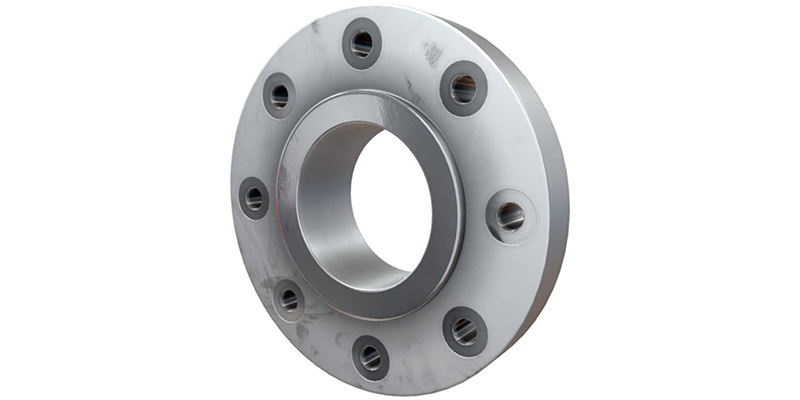
A slip on flange is a ring-shaped flange with a bore slightly larger than the pipe outside diameter, so the pipe "slips" into it and is secured with two fillet welds - no butt-weld bevel required.
The internal diameter of the flange is a little bigger than the pipe OD, letting it slide into position before welding. While the basic ring shape stays the same, SO flanges are mainly categorized by their face type (how they seal against a gasket) and by material.
Choose the SO flange face type by pressure and the mating equipment - RF for general service, FF for cast-iron/brittle gear, RTJ for high-pressure service - and choose the material by the fluid's corrosion demands.

The most common type. A small raised ring concentrates bolt load on the gasket for a stronger seal. Used across most pressure classes and gasket types (spiral wound, ring joint, soft cut).
A fully flush sealing surface used with flat-faced equipment, common in low-pressure or cast-iron connections. The full contact area spreads bolt load and protects brittle parts from bending.
A machined groove accepts a metal ring gasket for a metal-to-metal seal. Less common on SO than on weld neck, but used in high-pressure / high-temperature service where a mechanical seal is required.
Stainless steel (304L, 316L): excellent corrosion resistance and durability for general service.
Nickel alloys (Inconel, Monel, Hastelloy): for extreme heat or highly corrosive chemicals.
Duplex / super duplex (2205, 2507): higher strength and chloride resistance for seawater and process duties.
Slip on flanges are made to ASME B16.5, covering NPS 1/2 to 24 and classes 150, 300, 600, 900, 1500, and 2500. Dimensions are set by NPS and pressure class; the key measures are outside diameter, thickness, hub OD, bolt circle, socket bore, bolt holes, and weight.
Key dimensions: OD = total flange width; ID/bore = slightly larger than pipe OD (the "slip"); Thickness (C) = minimum pressure-bearing thickness; Bolt Circle = circle on which bolt holes sit.
Class 150 Slip On Flange Dimensions
NPS | DN | OD (mm) | Flange Thick. (mm) | Hub OD (mm) | Flange Length (mm) | RF Dia. (mm) | RF Height (mm) | PCD (mm) | Socket Bore (mm) | Bolt Holes | Bolt Size UNC | Weight (kg) |
1/2" | 15 | 90 | 9.6 | 30 | 14 | 34.9 | 2 | 60.3 | 22.2 | 4 | 1/2" | 0.8 |
3/4" | 20 | 100 | 11.2 | 38 | 14 | 42.9 | 2 | 69.9 | 27.7 | 4 | 1/2" | 0.9 |
1" | 25 | 110 | 12.7 | 49 | 16 | 50.8 | 2 | 79.4 | 34.5 | 4 | 1/2" | 0.9 |
1 1/4" | 32 | 115 | 14.3 | 59 | 19 | 63.5 | 2 | 88.9 | 43.2 | 4 | 1/2" | 1.4 |
1 1/2" | 40 | 125 | 15.9 | 65 | 21 | 73.0 | 2 | 98.4 | 49.5 | 4 | 1/2" | 1.4 |
2" | 50 | 150 | 17.5 | 78 | 24 | 92.1 | 2 | 120.7 | 61.9 | 4 | 5/8" | 2.3 |
2 1/2" | 65 | 180 | 20.7 | 90 | 27 | 104.8 | 2 | 139.7 | 74.6 | 4 | 5/8" | 3.2 |
3" | 80 | 190 | 22.3 | 108 | 29 | 127.0 | 2 | 152.4 | 90.7 | 4 | 5/8" | 3.7 |
3 1/2" | 90 | 215 | 22.3 | 122 | 30 | 139.7 | 2 | 177.8 | 103.4 | 8 | 5/8" | 5.0 |
4" | 100 | 230 | 22.3 | 135 | 32 | 157.2 | 2 | 190.5 | 116.1 | 8 | 5/8" | 5.9 |
5" | 125 | 255 | 22.3 | 164 | 35 | 185.7 | 2 | 215.9 | 143.8 | 8 | 3/4" | 6.8 |
6" | 150 | 280 | 23.9 | 192 | 38 | 215.9 | 2 | 241.3 | 170.7 | 8 | 3/4" | 8.6 |
8" | 200 | 345 | 27.0 | 246 | 43 | 269.9 | 2 | 298.5 | 221.5 | 8 | 3/4" | 13.7 |
10" | 250 | 405 | 28.6 | 305 | 48 | 323.8 | 2 | 362.0 | 276.2 | 12 | 7/8" | 19.5 |
12" | 300 | 485 | 30.2 | 365 | 54 | 381.0 | 2 | 431.8 | 327.0 | 12 | 7/8" | 29.0 |
14" | 350 | 535 | 33.4 | 400 | 56 | 412.8 | 2 | 476.3 | 359.2 | 12 | 1" | 41.0 |
16" | 400 | 595 | 35.0 | 457 | 62 | 469.9 | 2 | 539.8 | 410.5 | 16 | 1" | 54.0 |
18" | 450 | 635 | 38.1 | 505 | 67 | 533.4 | 2 | 577.9 | 461.8 | 16 | 1 1/8" | 59.0 |
20" | 500 | 700 | 41.3 | 559 | 71 | 584.2 | 2 | 635.0 | 513.1 | 20 | 1 1/8" | 75.0 |
24" | 600 | 815 | 46.1 | 663 | 81 | 692.2 | 2 | 749.3 | 616.0 | 20 | 1 1/4" | 100.0 |
Class 300 Slip On Flange Dimensions
NPS | DN | OD (mm) | Flange Thick. (mm) | Hub OD (mm) | Flange Length (mm) | RF Dia. (mm) | RF Height (mm) | PCD (mm) | Socket Bore (mm) | Bolt Holes | Bolt Size UNC | Weight (kg) |
1/2" | 15 | 95 | 12.7 | 38 | 21 | 34.9 | 2 | 66.7 | 22.2 | 4 | 1/2" | 1.2 |
3/4" | 20 | 115 | 14.3 | 48 | 24 | 42.9 | 2 | 82.6 | 27.7 | 4 | 5/8" | 1.4 |
1" | 25 | 125 | 15.9 | 54 | 25 | 50.8 | 2 | 88.9 | 34.5 | 4 | 5/8" | 1.4 |
1 1/4" | 32 | 135 | 17.5 | 64 | 25 | 63.5 | 2 | 98.4 | 43.2 | 4 | 5/8" | 1.8 |
1 1/2" | 40 | 155 | 19.1 | 70 | 29 | 73.0 | 2 | 114.3 | 49.5 | 4 | 3/4" | 2.7 |
2" | 50 | 165 | 20.7 | 84 | 32 | 92.1 | 2 | 127.0 | 61.9 | 8 | 5/8" | 3.2 |
2 1/2" | 65 | 190 | 23.9 | 100 | 37 | 104.8 | 2 | 149.2 | 74.6 | 8 | 3/4" | 4.6 |
3" | 80 | 210 | 27.0 | 117 | 41 | 127.0 | 2 | 168.3 | 90.7 | 8 | 3/4" | 5.9 |
3 1/2" | 90 | 230 | 28.6 | 133 | 43 | 139.7 | 2 | 184.2 | 103.4 | 8 | 3/4" | 7.7 |
4" | 100 | 255 | 30.2 | 146 | 46 | 157.2 | 2 | 200.0 | 116.8 | 8 | 3/4" | 10.0 |
5" | 125 | 280 | 33.4 | 178 | 49 | 185.7 | 2 | 235.0 | 144.4 | 8 | 3/4" | 12.7 |
6" | 150 | 320 | 35.0 | 206 | 51 | 215.9 | 2 | 269.9 | 171.4 | 12 | 3/4" | 17.7 |
8" | 200 | 380 | 39.7 | 260 | 60 | 269.9 | 2 | 330.2 | 222.2 | 12 | 7/8" | 26.0 |
10" | 250 | 445 | 46.1 | 321 | 64 | 323.8 | 2 | 387.4 | 276.3 | 16 | 1" | 36.0 |
12" | 300 | 520 | 49.3 | 381 | 71 | 381.0 | 2 | 450.9 | 327.1 | 16 | 1 1/8" | 52.0 |
14" | 350 | 585 | 52.4 | 413 | 74 | 412.8 | 2 | 514.4 | 359.2 | 20 | 1 1/8" | 68.0 |
16" | 400 | 650 | 55.6 | 470 | 83 | 469.9 | 2 | 571.5 | 410.5 | 20 | 1 1/4" | 91.0 |
18" | 450 | 710 | 58.8 | 533 | 89 | 533.4 | 2 | 628.7 | 461.8 | 24 | 1 1/4" | 111.0 |
20" | 500 | 775 | 63.5 | 584 | 95 | 584.2 | 2 | 685.8 | 513.1 | 24 | 1 1/4" | 141.0 |
24" | 600 | 915 | 70.0 | 692 | 106 | 692.2 | 2 | 812.8 | 616.0 | 24 | 1 1/2" | 211.0 |
Note: For NPS 26-60, use ASME B16.47 (Series A/B). Weights are theoretical, based on stainless steel density; actual weights vary with material and tolerances.
SO flanges win on cost, alignment ease, installation speed, and space - the trade-off is lower strength than weld neck flanges, so they suit low- to medium-pressure service.
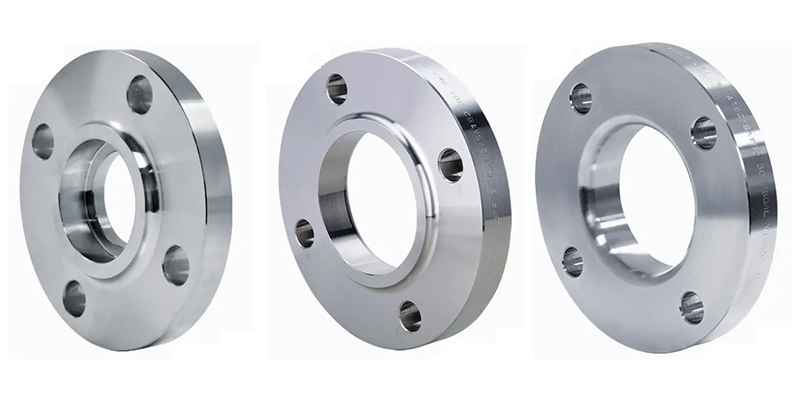
Lower Initial Cost
Slip On Flanges are generally less expensive to manufacture than Weld Neck flanges. Because they do not have a complex "hub" or neck, they require less raw material, which translates to direct savings for the procurement team.
Ease of Alignment
Since the flange slides over the pipe, it is much easier to align the bolt holes with the mating flange. The pipe does not need to be cut to an exact length with extreme precision, as the flange can be adjusted slightly along the pipe's axis before welding.
Simplified Installation
The "slip-over" nature of this component simplifies the fabrication process. It does not require a beveled pipe end for a butt weld; instead, it relies on fillet welds, which are often faster and easier for welders to execute in the field.
Space Efficiency
Slip On Flanges have a lower profile than many other flange types. In tight spaces or compact piping skids where vertical or horizontal clearance is a premium, the SO flange provides a reliable connection without the bulk of a long neck.
Installing an SO flange takes five steps - clean, slide on with a gap, weld outside, weld inside, then inspect - and the two fillet welds are what make the joint both strong and leak-tight.
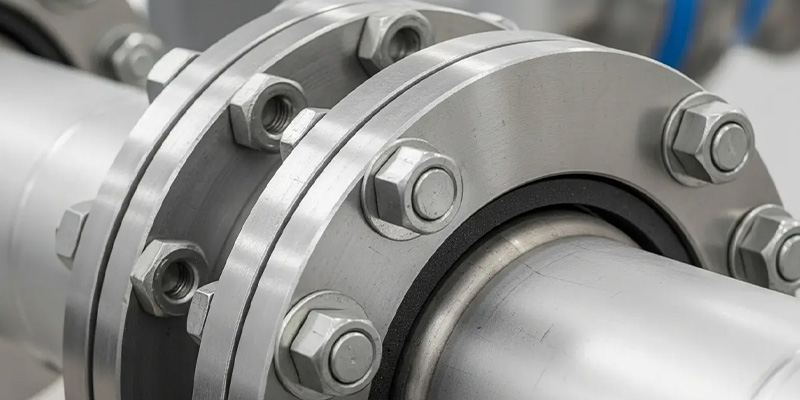
Step 1: Preparation
Ensure the pipe end is cut square and is free of burrs, rust, or debris. Clean the inside of the flange bore and the outside of the pipe to ensure a high-quality weld.
Step 2: Position the Flange
Slide the flange onto the pipe. The standard practice is to leave a small gap between the end of the pipe and the face of the flange. This gap is typically equal to the wall thickness of the pipe plus 3mm. This ensures the pipe end does not damage the flange face during expansion or cause interference with the gasket.
Step 3: External Fillet Weld
Perform a fillet weld around the outer circumference where the hub of the flange meets the pipe. This weld provides the primary structural strength for the connection.
Step 4: Internal Fillet Weld
Perform a second fillet weld on the inside of the flange, where the pipe end meets the internal bore. This weld prevents fluid from seeping between the pipe and the flange, protecting against crevice corrosion.
Step 5: Inspection
Once the welds have cooled, they should be inspected (often via Dye Penetrant or Magnetic Particle testing) to ensure there are no cracks or porosities.
SO flanges are best for low- to medium-pressure systems where cost and ease matter more than extreme strength - water, fire protection, cooling loops, HVAC, and moderate-pressure chemical lines.
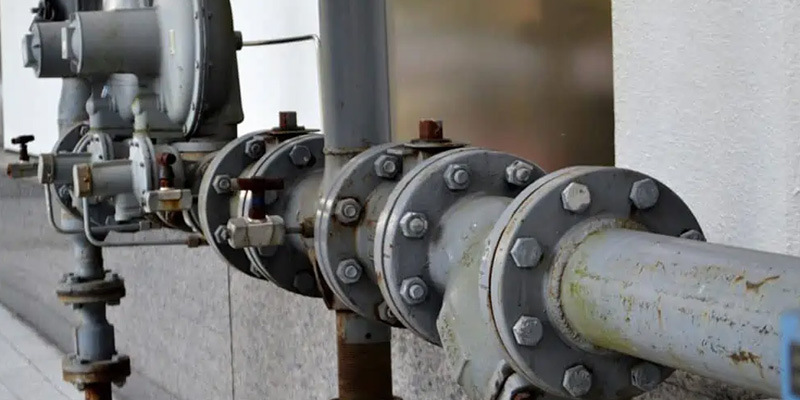
Water and Firefighting Systems: Their ease of installation makes them ideal for large-scale municipal water lines and fire suppression systems where pressures are manageable.
Cooling Water Circuits: In power plants and refineries, SO flanges are used extensively in secondary cooling loops.
Chemical Processing: When fabricated from 316L stainless steel or nickel alloys, Slip On Flanges are perfect for transporting non-hazardous chemicals or fluids at moderate pressures.
HVAC Systems: Used in large-scale heating and air conditioning piping for commercial buildings.
Low-Pressure Steam: They are suitable for steam lines where the pressure and temperature do not fluctuate violently, reducing the risk of fatigue at the weld point.
For a beginner, the choice is simple: pick a slip on flange when budget and ease matter in low/medium pressure; pick a weld neck flange for critical, high-pressure, high-temperature, or high-vibration service where strength and inspectability justify the cost.
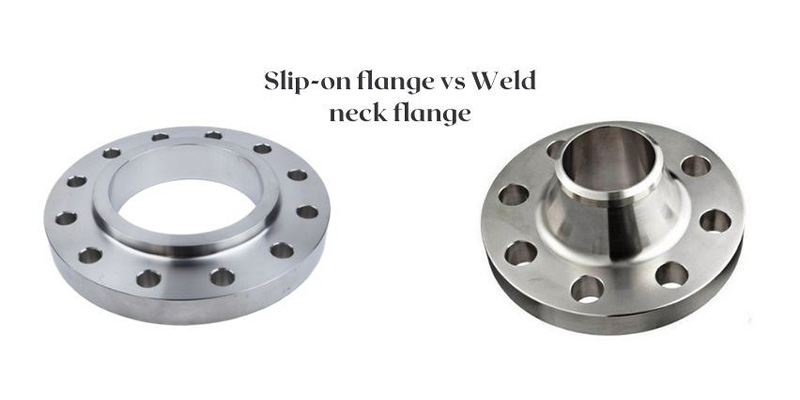
| Factor | Slip On (SO) | Weld Neck (WN) |
|---|---|---|
| Connection | Slides over pipe; two fillet welds | Long tapered hub; full-penetration butt weld |
| Installation | Faster, less skill, no bevel | Slower, needs bevel + alignment |
| Cost | Lower | Higher |
| Strength | Moderate (~2/3 of WN) | High; superior fatigue resistance |
| Pressure / temperature | Low to medium | High pressure & temperature, cyclic load |
| Inspectability | Fillet weld, harder to RT/UT | Full-penetration, RT/UT inspectable |
| Service life | Good in steady conditions | Longer (~3x) under severe duty |
| Best use | Water, HVAC, budget lines | Oil & gas, power, critical systems |
Beyond SO vs WN, match the face type and material to the job - the table below helps a beginner pick quickly.
| Selection question | Choose | Reason |
|---|---|---|
| General process service? | RF SO flange | Most common; good seal at low cost |
| Bolting to cast iron / brittle gear? | FF SO flange | Avoids bending the brittle part |
| High-pressure gas / oilfield? | RTJ (prefer WN) | Metal-to-metal seal; SO RTJ is rare |
| Corrosive fluid? | 316L / duplex / nickel alloy | Match corrosion resistance to fluid |
| Tight budget + low/medium pressure? | Slip on flange | Lowest installed cost |
| High pressure / vibration / inspectability? | Weld neck flange | Stronger, RT/UT inspectable |
What is a slip on flange used for?
A slip on flange connects pipe, valves, or equipment in low- to medium-pressure systems. It slides over the pipe and is welded with two fillet welds, making it easy and cheap to install for water, HVAC, cooling, and general process lines.
Slip on vs weld neck: which should a beginner choose?
Choose slip on for budget-conscious, low- to medium-pressure jobs where installation ease matters. Choose weld neck for critical, high-pressure, high-temperature, or vibrating service where strength and radiographic inspection justify the higher cost.
How is a slip on flange installed?
In five steps: (1) cut and clean the pipe square; (2) slide the flange on, leaving a gap of wall thickness + 3 mm to the face; (3) fillet-weld the outside; (4) fillet-weld the inside to seal the crevice; (5) inspect the welds (dye penetrant or magnetic particle).
What standard covers slip on flange dimensions?
SO flange dimensions for NPS 1/2-24 follow ASME B16.5; NPS 26-60 follow ASME B16.47 (Series A/B). The forged material is covered by ASTM A182 (stainless/duplex/nickel) and related specs.
Is a slip on flange as strong as a weld neck flange?
No. A slip on flange has about two-thirds the strength of a weld neck flange and is not radiographically inspectable in the same way. It is specified for low- to medium-pressure service, not for the most severe duty.
What is the gap between the pipe end and the flange face?
Standard practice leaves a gap equal to the pipe wall thickness plus about 3 mm. This prevents the pipe end from contacting or damaging the flange face during thermal expansion and avoids interference with the gasket.
A slip on flange is the beginner-friendly choice: it slides over the pipe, uses two simple fillet welds, costs less, and aligns easily - ideal for low- to medium-pressure water, HVAC, cooling, and process lines. Use the dimension tables and the SO vs WN / face-type selection tables above to specify the right flange, and step up to a weld neck flange when the service is critical or high-pressure.
Need slip on flanges or help specifying them? JN Alloy stocks slip on flanges in stainless steel (304/316/316L/904L/254SMO), duplex (2205/S31803/S32205), super duplex (2507/S32760), and nickel alloys (Inconel, Incoloy, Hastelloy, Monel) with full material test certificates and custom machining. Contact our engineers: Info@jnalloy.com | +86-193-3990-0211 | www.jnalloy.com.


