
Views: 6 Author: Monica Publish Time: 2026-03-16 Origin: Site


Threaded flanges are pipe flanges that feature tapered internal thread. Their components include the flange blade containing the bolt holes and sealing face, the threaded bore that receives the pipe, and the hub that provides reinforcement at the flange-to-pipe interface.

This article introduces threaded flange properties, dimensions, connection methods, applications, and a comparison with slip on flanges.
The primary feature of threaded flanges is the tapered internal thread. This tapered design generates mechanical engagement that secures the connection without fusion welding.
The dimensional range of threaded flanges generally extends from NPS ½ inch through NPS 4 inches, though availability up to NPS 24 inches exists for certain pressure classes.
Pressure class availability spans from Class 150 through Class 2500, accommodating a wide range of service pressures. However, industry practice typically restricts threaded flanges to Class 300 and below for most applications due to concerns about thread deformation under elevated temperatures and pressures. The flange facing options include raised face (RF), flat face (FF), and ring-type joint (RTJ), with raised face being the most common property for general service.
Threaded flanges are manufactured from forged materials, with common specifications including ASTM A105 for carbon steel and ASTM A182 F304/F316 for stainless steel grades. The forging process provides superior grain structure and mechanical properties compared to cast alternatives.
A critical property requiring attention is the stress reduction factor applied to threaded connections under ASME B31.3 piping code. Threaded joints receive a strength reduction factor of 0.60, meaning they are rated at only 60% of the allowable stress of butt-welded connections.
Threaded flange dimensions are strictly governed by ASME B16.5, which including flange outside diameter, thickness, bolt circle diameter, number of bolt holes, and bolt hole diameter across all pressure classes from 150 through 2500.
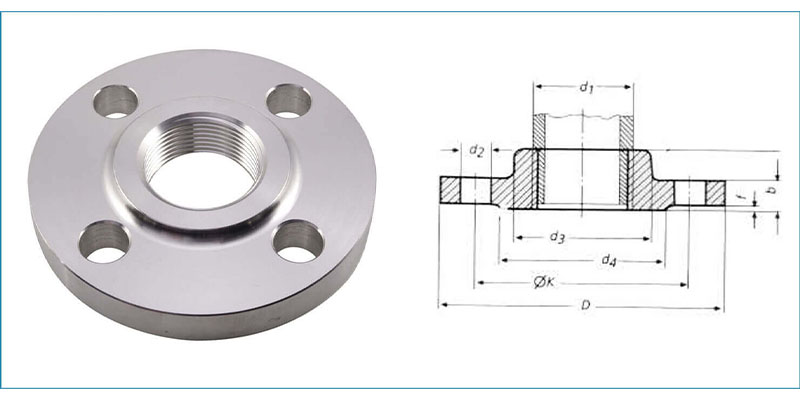
The tables below present comprehensive dimensional data for threaded flanges across multiple pressure classes.
Class 150 Threaded Flange Dimensions
NPS | Flange OD (in) | Flange Thickness (in) | Bolt Circle Diameter (in) | Number of Bolts | Bolt Hole Diameter (in) |
1/2 | 3.50 | 0.44 | 2.38 | 4 | 0.62 |
3/4 | 3.88 | 0.50 | 2.75 | 4 | 0.62 |
1 | 4.25 | 0.56 | 3.12 | 4 | 0.62 |
1-1/4 | 4.62 | 0.62 | 3.50 | 4 | 0.62 |
1-1/2 | 5.00 | 0.69 | 3.88 | 4 | 0.62 |
2 | 6.00 | 0.75 | 4.75 | 4 | 0.75 |
2-1/2 | 7.00 | 0.88 | 5.50 | 4 | 0.75 |
3 | 7.50 | 0.94 | 6.00 | 4 | 0.75 |
4 | 9.00 | 0.94 | 7.50 | 8 | 0.75 |
6 | 11.00 | 1.00 | 9.50 | 8 | 0.88 |
8 | 13.50 | 1.12 | 11.75 | 8 | 0.88 |
10 | 16.00 | 1.19 | 14.25 | 12 | 1.00 |
12 | 19.00 | 1.25 | 17.00 | 12 | 1.00 |
NPS | Flange OD (in) | Flange Thickness (in) | Bolt Circle Diameter (in) | Number of Bolts | Bolt Hole Diameter (in) |
1/2 | 3.75 | 0.56 | 2.62 | 4 | 0.62 |
3/4 | 4.62 | 0.62 | 3.25 | 4 | 0.75 |
1 | 4.88 | 0.69 | 3.50 | 4 | 0.75 |
1-1/4 | 5.25 | 0.75 | 3.88 | 4 | 0.75 |
1-1/2 | 6.12 | 0.81 | 4.50 | 4 | 0.88 |
2 | 6.50 | 0.88 | 5.00 | 8 | 0.75 |
2-1/2 | 7.50 | 1.00 | 5.88 | 8 | 0.88 |
3 | 8.25 | 1.12 | 6.62 | 8 | 0.88 |
4 | 10.00 | 1.25 | 7.88 | 8 | 0.88 |
6 | 12.50 | 1.44 | 10.62 | 12 | 0.88 |
8 | 15.00 | 1.62 | 13.00 | 12 | 1.00 |
10 | 17.50 | 1.88 | 15.25 | 16 | 1.12 |
12 | 20.50 | 2.00 | 17.75 | 16 | 1.25 |
NPS | Flange OD (in) | Flange Thickness (in) | Bolt Circle Diameter (in) | Number of Bolts | Bolt Hole Diameter (in) |
1/2 | 3.75 | 0.56 | 2.62 | 4 | 0.62 |
3/4 | 4.62 | 0.62 | 3.25 | 4 | 0.75 |
1 | 4.88 | 0.69 | 3.50 | 4 | 0.75 |
1-1/4 | 5.25 | 0.75 | 3.88 | 4 | 0.75 |
1-1/2 | 6.12 | 0.81 | 4.50 | 4 | 0.88 |
2 | 6.50 | 0.88 | 5.00 | 8 | 0.75 |
2-1/2 | 7.50 | 1.00 | 5.88 | 8 | 0.88 |
3 | 8.25 | 1.12 | 6.62 | 8 | 0.88 |
4 | 10.00 | 1.25 | 7.88 | 8 | 1.00 |
6 | 12.50 | 1.44 | 10.62 | 12 | 1.00 |
8 | 15.00 | 1.62 | 13.00 | 12 | 1.12 |
10 | 17.50 | 1.88 | 15.25 | 16 | 1.25 |
12 | 20.50 | 2.00 | 17.75 | 16 | 1.38 |
Class 600 Threaded Flange Dimensions (ASME B16.5)
NPS | Flange OD (in) | Flange Thickness (in) | Bolt Circle Diameter (in) | Number of Bolts | Bolt Hole Diameter (in) |
1/2 | 3.75 | 0.56 | 2.62 | 4 | 0.62 |
3/4 | 4.62 | 0.62 | 3.25 | 4 | 0.75 |
1 | 4.88 | 0.69 | 3.50 | 4 | 0.75 |
1-1/4 | 5.25 | 0.75 | 3.88 | 4 | 0.75 |
1-1/2 | 6.12 | 0.81 | 4.50 | 4 | 0.88 |
2 | 6.50 | 0.88 | 5.00 | 8 | 0.75 |
2-1/2 | 7.50 | 1.00 | 5.88 | 8 | 0.88 |
3 | 8.25 | 1.12 | 6.62 | 8 | 0.88 |
4 | 10.75 | 1.25 | 8.50 | 8 | 1.00 |
6 | 14.00 | 1.56 | 11.50 | 12 | 1.12 |
8 | 16.50 | 1.75 | 13.75 | 12 | 1.25 |
10 | 20.00 | 2.00 | 17.00 | 16 | 1.38 |
12 | 22.00 | 2.19 | 19.25 | 20 | 1.38 |
Minimum Thread Engagement for NPT Connections
NPS | Minimum Thread Engagement (mm) | Number of Threads |
1/2 | 13.5 | 8 |
1 | 16.2 | 8 |
2 | 19.1 | 8 |
4 | 25.4 | 8 |
Under-engagement risks joint failure under pressure, while over-engagement can crack the flange body . The use of thread gauges during assembly is recommended to verify proper fit.
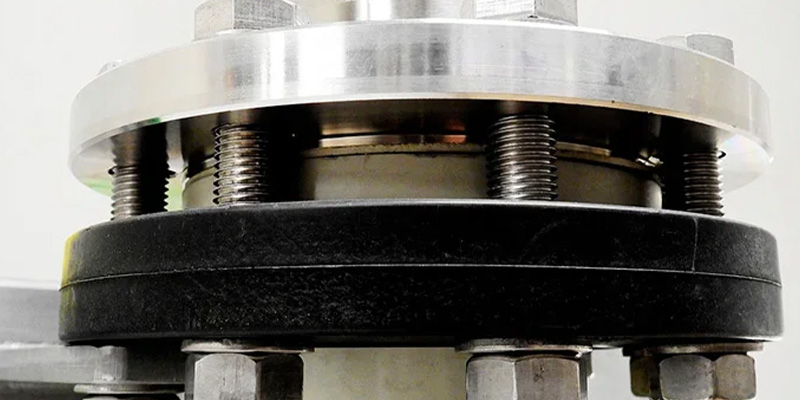
The Mechanical Threaded Joint is the primary connection method. It involves the engagement of the flange’s internal NPT threads with the external threads of the pipe.
This connection requires the use of a thread sealant—typically a PTFE tape or a high-grade pipe "dope"—to fill the microscopic gaps between the thread crests and roots, ensuring a pressure-tight seal and providing lubrication to prevent galling during the torquing process.
Seal Welding is a secondary connection method used when additional leak protection is required. In this scenario, the pipe is threaded into the flange as usual, but a small fillet weld is applied around the junction where the pipe meets the flange hub.
While this negates the "no-weld" benefit of the flange, it provides a permanent, leak-proof barrier for systems handling hazardous fluids or high-pressure steam where mechanical threads alone might fail.
Bolted Face Connections constitute the method by which the flange joins the rest of the piping system. Once the flange is secured to the pipe, it is mated to another flange using a series of bolts and a gasket.
For stainless steel and nickel alloy applications, the selection of the gasket is paramount to prevent galvanic corrosion and ensure the seal remains intact under fluctuating thermal loads.
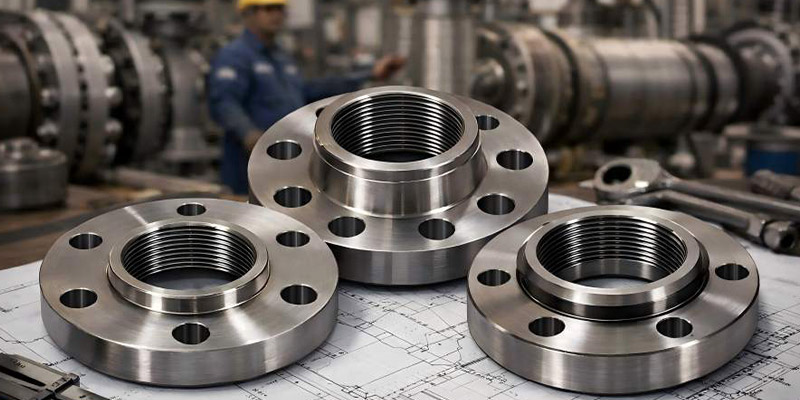
One of the most prevalent applications is in Explosive or Hazardous Environments. In facilities such as gas processing plants or chemical refineries, performing "hot work" requires extensive shutdowns and safety permits. Threaded flanges allow for piping modifications or repairs to be conducted safely without the risk of an open flame or electrical arc, maintaining operational continuity.
They are also widely used in Small-Diameter Piping Systems. For pipes with a nominal size of 4 inches or smaller, threading is often more cost-effective and faster than welding. These systems are common in utility lines, compressed air distribution, and low-pressure water systems where the mechanical strength of a weld is not strictly necessary.
In the realm of Highly Corrosive Media, threaded flanges made from specialized alloys like Inconel or Monel are frequently used. These alloys are often difficult to weld due to their specific metallurgical sensitivities, such as susceptibility to hot cracking. Threading provides a reliable connection method that bypasses the complexities of high-alloy welding procedures while still offering the chemical resistance of the base metal.
Finally, threaded flanges are indispensable for Temporary Piping or Skids. Modular systems that require frequent assembly and disassembly benefit from the reversible nature of threaded connections. Unlike welded joints, which must be cut and re-beveled, threaded flanges can be unscrewed, inspected, and reused, significantly reducing long-term maintenance costs and material waste.
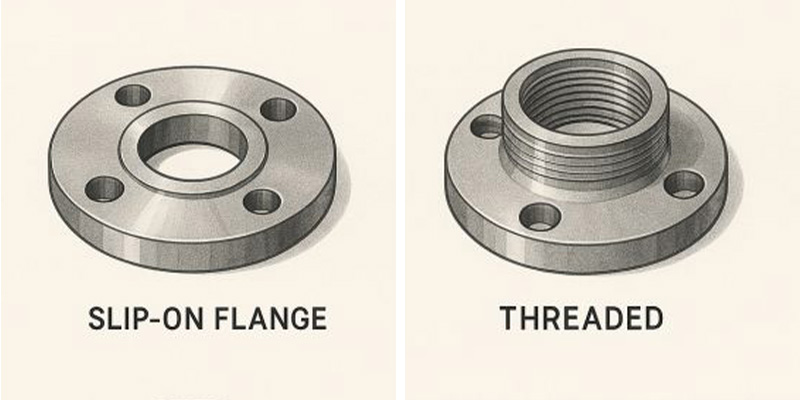
1. Connection Methods
The biggest difference is how the flange "grips" the pipe.
Slip-On Flanges: These are designed with an internal diameter slightly larger than the outside diameter of the pipe. The flange literally "slips" over the pipe and is positioned so that the pipe end is slightly recessed from the flange face.
Threaded Flanges: These feature internal (female) threads—usually NPT—that match the external threads on the pipe. The connection is made by screwing the pipe into the flange, similar to a nut and bolt.
2. Welding Requirements
This is where the two types diverge most significantly in terms of labor and certification.
Slip-On Flanges (Double Weld): An SO flange requires two fillet welds for a secure, leak-proof seal: one on the outside (at the hub) and one on the inside (at the pipe end).
Threaded Flanges (No Weld): The primary advantage of a threaded flange is that it can be installed without welding. This is critical in highly volatile environments (like active refineries) where "hot work" or open flames are prohibited due to explosion risks. However, sometimes a small "seal weld" is added to prevent threads from backing out under vibration.
3. Strength and Pressure Ratings
While both are common in Class 150 and Class 300 systems, their mechanical limits differ.
Fatigue Resistance: Slip-On flanges generally have a lower fatigue life than weld neck flanges, but they are sturdier than threaded flanges under vibration. The double-welded structure of an SO flange provides a more rigid, unified joint.
Leak Risk: Threaded connections are inherently more prone to "weeping" or micro-leaks, especially in systems subject to rapid heating and cooling. As the metal expands and contracts, the threads can loosen. Slip-on welds, once cooled, are airtight.
4. Wall Thickness and Pipe Material
The choice is often dictated by the pipe itself.
Threaded Constraints: You cannot use threaded flanges on thin-walled pipes (such as Schedule 5S or 10S). Threaded flanges are typically reserved for Schedule 40 and heavier pipes.
Slip-On Versatility: SO flanges can be used on almost any pipe schedule, as the fillet weld attaches to the outer surface without compromising the pipe's wall integrity.
In conclusion, choose a Slip-On flange when you need a permanent, leak-proof connection that can withstand mechanical stress and vibration. Choose a Threaded flange for low-pressure utility lines, maintenance-heavy systems, or "no-spark" zones where welding is not an option.
We welcome your inquiries for your next project.


