
Views: 52 Author: Monica Publish Time: 2026-02-24 Origin: Site


This article analyzes the strength of schedule 80 steel pipe, including yield strength, compressive strength, and other properties.
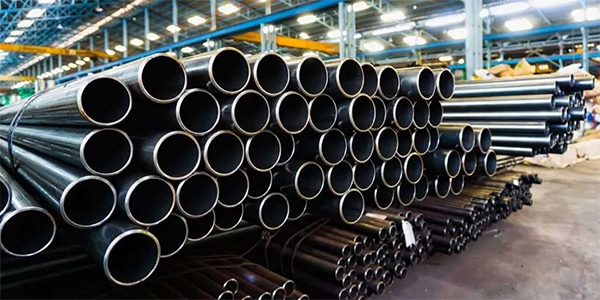
"Schedule 80" (Sch 80) is not a material grade; it is a dimension standard defined by ASME B36.10 and ASME B36.19. It dictates the wall thickness relative to the nominal pipe size (NPS). A Schedule 80 pipe has a thicker wall than a Schedule 40 pipe, allowing it to withstand higher internal pressures given the same material.
However, the yield strength, tensile strength, and compressive limits which is determined solely by the material specification. Therefore, a "Schedule 80 Strength Table" is technically incomplete without specifying the alloy. A Schedule 80 pipe made of low-grade carbon steel possesses vastly different mechanical properties than one manufactured from Inconel 625.
For the purpose of this analysis, we will examine the mechanical properties of the most common materials utilized in Schedule 80 configurations within our factory's production scope: Carbon Steel, Austenitic Stainless Steel, and Nickel Alloys.
The table below presents calculated strength values for our stainless steel and premium nickel alloy. Values are for the pipe cross-section only and assume uniform material properties.

NPS | Metal Area A (in²) | Stainless Yield Hoop Pressure (psi) | Stainless Axial Compressive Yield Load (lbs) | Nickel Alloy Yield Hoop Pressure (psi) | Nickel Alloy Axial Compressive Yield Load (lbs) |
½" | 0.320 | 10,500 | 9,600 | 21,000 | 19,200 |
¾" | 0.433 | 8,800 | 12,990 | 17,600 | 25,980 |
1" | 0.639 | 8,170 | 19,170 | 16,340 | 38,340 |
1¼" | 0.860 | 6,900 | 25,800 | 13,800 | 51,600 |
1½" | 1.038 | 6,320 | 31,140 | 12,640 | 62,280 |
2" | 1.429 | 5,510 | 42,870 | 11,020 | 85,740 |
2½" | 2.228 | 5,760 | 66,840 | 11,520 | 133,680 |
3" | 2.945 | 5,140 | 88,350 | 10,280 | 176,700 |
4" | 4.272 | 4,490 | 128,160 | 8,980 | 256,320 |
6" | 8.030 | 3,910 | 240,900 | 7,820 | 481,800 |
8" | 12.25 | 3,480 | 367,500 | 6,960 | 735,000 |
10" | 15.30 | 2,790 | 459,000 | 5,580 | 918,000 |
12" | 18.20 | 2,350 | 546,000 | 4,700 | 1,092,000 |
Notes on calculations:
Hoop pressure uses the Barlow formula (conservative; actual burst pressures are higher).
Axial compressive loads assume short-column behavior (L/D < 10); for slender columns, Euler buckling governs and must be evaluated per project.
All values are minimum guaranteed. Typical tested values from our mill certificates are 15–30% higher.
The "strength" of a Schedule 80 pipe is most often measured by its ability to contain internal pressure. To calculate the internal pressure limit, we utilize Barlow’s Formula, which relates the internal pressure to the pipe's wall thickness and yield strength.
The formula is expressed as:
Where:
P = Internal pressure
S = Allowable stress (typically 2/3 of yield strength or based on ASME code factors)
t = Nominal wall thickness
D = Outside diameter
Example Calculation:
For a 2-inch NPS Schedule 80 pipe made of 316L stainless steel with an allowable stress of 16,700 PSI:
Where:
E = Modulus of Elasticity
I = Moment of Inertia
K = Column effective length factor
L = Unsupported length
By increasing the wall thickness, we increase the value of $I$, thereby exponentially increasing the pipe's resistance to compressive failure without changing the outer diameter of the structure.
In chemical processing plants, our 316L Schedule 80 pipes handle 2,500–4,000 psi operating pressures with zero corrosion allowance loss after 10+ years.
In power generation, nickel alloy Schedule 80 headers withstand cyclic thermal loads while maintaining full compressive strength under support loads exceeding 500,000 lbs.
Offshore oil & gas operators specify our Inconel 625 Schedule 80 for downhole and subsea lines precisely because the documented compressive yield loads provide the safety margin required by API and DNV standards.
Every batch undergoes full mechanical testing per ASTM, including tensile, hardness, and flattening tests. Our ISO 9001 and PED-certified processes guarantee traceability from melt to finished pipe.


