
Views: 2 Author: Monica Publish Time: 2026-11-09 Origin: Site


Table of Contents
Super duplex S32750 (UNS S32750, SAF 2507, 1.4410) earns its place in desalination the same way it does offshore - by holding up where chloride concentration, temperature and pressure meet at once.

This article, part of the Super Duplex S32750 hub, is the application map: it walks the SWRO high-pressure train, the MED and MSF thermal plants, and the intake and brine outfall, and states plainly where S32750 is the right metal, where titanium, 6Mo or 2205 take over, and the ASTM specification that governs each item. For the underlying metallurgy - PREN, welding, chlorination and temperature limits - use the companion S32750 desalination technical guide; this page answers the where-and-why.
Because one plant needs a single alloy that survives 19,000-35,000 ppm chloride at up to ~70 °C in MED/MSF while carrying 55-70 bar in SWRO, and only super duplex delivers that corrosion resistance at roughly twice the yield strength of 316L - so it covers more plant sections per material line item than any competing metal.
Desalination is three different processes sharing one hostile fluid. Seawater reverse osmosis (SWRO) presses seawater through membranes at 55-70 bar; multi-effect distillation (MED) and multi-stage flash (MSF) boil it at 60-120 °C. The common enemy is chloride: seawater carries about 19,000 ppm, and evaporation or membrane rejection concentrates it to 35,000-100,000 ppm in the brine. 316L, with a PREN near 25, pits and stress-cracks in that environment within months; S32750's PREN of 41-43 and duplex structure give it the pitting, crevice and chloride SCC resistance the duty demands.
The economic lever is strength. S32750's minimum yield strength of 550 MPa is about twice that of 316L and well above the ~300-400 MPa of 6Mo, so a pressure-governed SWRO pipe or a weight-governed evaporator tubesheet can be built thinner and lighter. That is why a desalination specification is usually a three-way discussion among S32750, 254 SMO / 6Mo and titanium, with 2205 duplex as the budget option and the seawater piping selection guide setting the overall frame. Start with what S32750 is and its composition if the grade is new to you.
S32750 owns the high-pressure seawater and brine piping, the high-pressure pump wet end, and the energy-recovery and concentrate loops - everywhere pressure and chloride coincide; titanium is reserved for the membrane pressure vessels and 254 SMO for the hottest concentrate streams, so the alloy map follows the pressure-and-temperature gradient, not habit.
SWRO is the membrane process where material selection is driven by pressure first. The raw seawater is filtered, raised to 55-70 bar, and forced against the membrane; what comes out the high-pressure side is product water plus a concentrate stream at roughly 1.5-2x the feed salinity. The high-pressure pump casing, impeller and discharge, the energy-recovery device (pressure exchanger or turbine), and the high-pressure brine header all see maximum pressure and near-maximum chloride at once - which is precisely the S32750 envelope.
In practice the duplex steel pipe in an SWRO plant is specified to ASTM A790 (or ASME SA-790) as seamless S32750 for the high-pressure lines, with forgings to ASTM A182 F53 for pump casings and valve bodies and fittings to ASTM A815 WP-S32750. The membrane pressure vessels are glass-reinforced plastic, and titanium or 254 SMO appear only where a specific stream justifies the premium - the 254 SMO applications page and the nickel-alloy seawater comparison cover those step-ups. The rule of thumb: if the line runs above ~20 bar AND wetted by brine, S32750 is the default; below that, 2205 or lined carbon steel is usually the value choice.
Plant section | Wetted condition | Typical material | Why |
|---|---|---|---|
High-pressure pump casing / impeller | 55-70 bar, 19k-35k ppm Cl | S32750 (A182 F53) | Strength + chloride pitting resistance |
High-pressure seawater / brine header | 55-70 bar, concentrate | Seamless S32750 (A790) | Pressure + pitting combined |
Energy-recovery device (PX / turbine) | Cyclic pressure, brine | S32750 cast / forged | Corrosion fatigue + erosion resistance |
Membrane pressure vessel | ~70 bar, seawater | FRP (non-metallic) | S32750 not needed |
Low-pressure feed / backwash | < 20 bar, raw seawater | 2205 or lined CS | Value at low pressure |
Product-water / permeate line | Low Cl, low pressure | 316L or uPVC | S32750 uneconomical |
In MED the evaporator tube bundles and brine heater are the decisive items: S32750 and 254 SMO serve the cooler effects and structural seawater boxes, while titanium owns the hottest effects and the brine heater - because at 60-70 °C and rising chloride, the crevice and pitting margin of even super duplex runs out and titanium's immunity pays.
MED (multi-effect distillation) cascades vapour through successive effects at falling pressure and temperature, typically 60-70 °C at the hot end. The first effect and the brine heater carry the hottest, most concentrated brine, so they are where titanium (Grade 2/7) or 6Mo is specified - titanium is effectively immune to chloride pitting up to far beyond the process temperature. S32750 then takes the downstream effects, the tube sheets, water boxes and the structural seawater and brine piping, where its combination of corrosion resistance, strength and lower cost than titanium earns the spend.
The practical split mirrors the temperature ladder. Super duplex tubing to ASTM A789 and tubesheet plate to ASTM A240 is common for the cooler effects and inter-effect piping, while the hottest brine heater tubes are specified in titanium. A designer who forces S32750 into the brine heater to save capex invites crevice corrosion under scale and deposit - the same mechanism the technical guide documents with its temperature-ceiling data. The rule is simple: in MED, temperature decides, and above ~70 °C the super duplex answer hands off to titanium.
MSF's brine heater runs at 90-120 °C - above the super duplex temperature ceiling - so titanium owns the heater tubes and super duplex is confined to the lower-temperature flash stages, demisters, distillate headers and brine recirculation piping.
MSF (multi-stage flash) is the hottest of the thermal processes, flashing brine in stages from about 120 °C at the brine heater down to ambient. The brine heater tubes at 90-120 °C in deaerated, high-chloride brine are a titanium Grade 2/7 application - Grade 2 titanium absorbs hydrogen and hydrides in deaerated hot brine, which is exactly why Grade 7 (Ti-0.15Pd) is specified there, a nuance the content farms almost never mention. Super duplex, with its temperature limit in the 250-300 °C range only for dry, un-chlorinated service, is not the heater-tube metal in hot chloride.
Where S32750 does earn its keep in MSF is the flash chamber internals, demister supports, distillate troughs and headers, and the large-diameter brine recirculation and blowdown piping, where temperatures are moderate but chloride and wet-dry cycling dominate. Here the duplex structure resists the chloride SCC that would crack austenitic 316L, at a lower installed cost than nickel alloys. The offshore applications page shows the same alloy logic in a different chloride arena.
Component | Operating range | Governing material | S32750 role |
|---|---|---|---|
MSF brine heater tubes | 90-120 °C, deaerated brine | Ti Grade 7 (Ti-0.15Pd) | Not used - above ceiling |
MED first-effect / brine heater | 60-70 °C | Ti Gr 2/7 or 254 SMO | Not used - marginal |
MED cooler effects & inter-effect | 40-60 °C | S32750 (A789 / A240) | Primary tube & tubesheet |
MSF flash internals / demisters | 40-90 °C | S32750 / 316L | S32750 where SCC risk |
Distillate headers / troughs | < 60 °C, low Cl | 316L or S32750 | Value option |
Brine recirculation / blowdown | 40-80 °C, 35k-100k ppm | S32750 (A790) | Primary piping |

Intake piping is 2205 territory unless it is buried, warm or high-velocity, but the brine outfall and concentrate lines - the most chloride-loaded, most underestimated sections of any plant - are where S32750 earns its premium, because they carry 35,000-100,000 ppm chloride day after day where 316L fails quickly.
The intake is often treated as a trivial pipe run, but it sets the biofouling and chlorination pattern for the whole plant. Raw seawater intake and screen structures are typically 2205 duplex or lined carbon steel, because the water is cool and natural. S32750 is specified at the intake only when the water is warm (Arabian Gulf, Red Sea), the velocity is high, or chlorination dosing is aggressive - the conditions that push crevice and pitting risk up.
The outfall is the mirror image and the more important S32750 application. Brine at 35,000-100,000 ppm chloride, often warm and slightly acidic from antiscalant, is the most corrosive stream in the plant, yet it is routinely under-specified. Concentrate discharge piping and diffuser headers in S32750 to ASTM A790 outlast 316L by an order of magnitude and avoid the pinhole leaks that shut a plant down. The two S32750 shipment case studies - butt-weld fittings to Saudi Arabia and pipe fittings to Brazil - are both desalination-market exports that show the alloy in exactly this service.
Because pump impellers, casings and pressure-exchanger parts suffer corrosion fatigue and erosion-corrosion under cyclic load in chloride, and S32750's ferrite-austenite structure plus higher yield strength resists both where 316L fails by fatigue-assisted pitting.
Desalination pumps and energy-recovery devices are the plant's dynamic components. Impellers spin in chloride, valve trims and pressure-exchanger rotors cycle pressure thousands of times a day, and the combination of cyclic stress plus chloride produces corrosion fatigue - a failure mode 316L cannot survive but duplex resists through its ferrite phase. S32750 castings and forgings to ASTM A182 F53 are the standard wet-end material for the high-pressure pump, and super duplex bar to ASTM A276 supplies the shafts.
This is also where the mechanical properties matter directly: the higher yield strength lets a designer cut section thickness in rotating parts, reducing inertia and weight without giving up strength. The energy-recovery device - now near-universal in large SWRO plants because it halves the specific energy - runs its pressure exchanger in concentrate, so the wetted parts are S32750 for the same corrosion-fatigue reason.
Four metals, four jobs: 2205 for cool natural seawater, S32750 for the pressure-and-chloride core of the plant, 254 SMO for the hottest chloride streams and complex welds, and titanium for the brine heater and membrane vessels - the decision is a cost-versus-temperature-versus-pressure triangle, not a single 'best' material.
Picking a desalination alloy is a three-axis problem. Temperature rules the thermal plant, pressure rules SWRO, and chloride loads everything. 2205 (PREN 34-38) is the cheapest duplex and fine for cool intake and low-pressure duty; S32750 (PREN 41-43) adds the temperature and pressure margin the core plant needs at about 30-50% over 2205; 254 SMO (PREN 43-45) buys crevice margin and welding tolerance in the hottest chloride streams at higher cost and lower strength; titanium buys immunity at the highest capital cost and the lowest life-cycle risk.
The comparison table below fixes the numbers, but the strategic point is that S32750 is the centre of gravity: it is the strongest of the stainless options, sits in the middle on cost, and covers more plant sections than any rival. For the full metallurgical comparison including S32760 and 904L, the technical guide carries the PREN, CPT and crevice-temperature detail.
Alloy | PREN | Yield (min) | Cost index | Desalination sweet spot |
|---|---|---|---|---|
2205 (S32205) | 34-38 | >= 450 MPa | 1.0 (base) | Cool intake, low-pressure feed |
S32750 (2507) | 41-43 | >= 550 MPa | ~1.3-1.5x | HP train, brine outfall, MED effects |
254 SMO (6Mo) | 43-45 | >= 300 MPa | ~1.8-2.2x | Hottest chloride, complex welds |
Titanium Gr 2/7 | immune | ~275 MPa | ~2.5-4x | Brine heater, membrane vessels |
316L | ~25 | >= 170 MPa | ~0.7x | Product water only - not wetted brine |
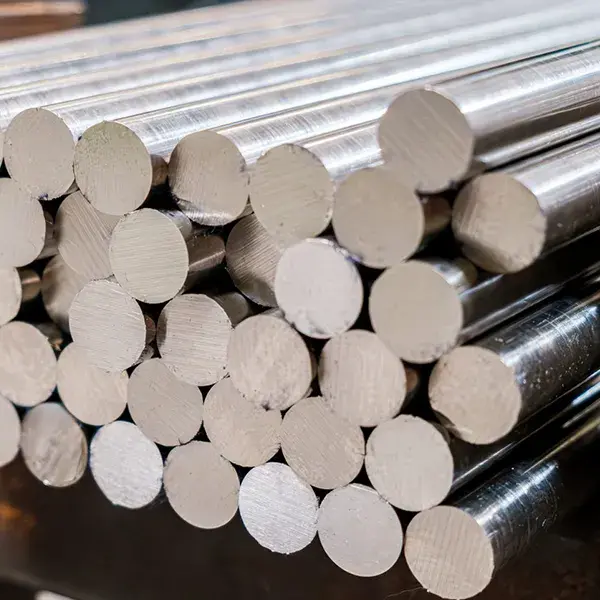
Specify the product form against its ASTM standard - A790/A789 for pipe and tube, A240 for plate, A182 F53 for forgings, A815 for fittings, A276 for bar - and demand EN 10204 3.1 or 3.2 certification with PREN, ferrite, ASTM G48 and corrosion-test results, because a desalination plant's acceptance depends on the paper as much as the metal.
Desalination clients - especially the EPC contractors and water authorities that dominate the sector - audit the certification before they accept material. The specification should name the product form against its standard: pipe and tube to ASTM A790 and A789, plate to ASTM A240, forgings to ASTM A182 F53, fittings to ASTM A815, and bar to ASTM A276. Each item carries its own test and tolerance set, so the order line must cite the standard, not just the grade.
The certificate package is where E-E-A-T and procurement discipline meet. A complete desalination order carries EN 10204 3.1 (or 3.2 for witnessed testing) plus the PREN calculation, ferrite content, ASTM A923 intermetallic check and ASTM G48 pitting/crevice temperature where chloride service demands it. The properties page and material data page document the values behind each certificate line.
Product form | ASTM standard | Typical desalination item |
|---|---|---|
Seamless / welded pipe | ASTM A790 / A928 | HP seawater, brine outfall, recirculation |
Seamless / welded tube | ASTM A789 | MED effects, heat-exchanger tubes |
Plate | ASTM A240 / EN 10028-7 | Tubesheets, channel covers, fabricated boxes |
Forgings | ASTM A182 F53 | Pump casings, valve bodies, flanges |
Butt-weld fittings | ASTM A815 WP-S32750 | Elbows, tees, reducers in HP lines |
Bar | ASTM A276 / A479 | Pump shafts, machined internals |

Three predictable failures: forcing it into the brine heater above ~70 °C (crevice attack), welding it with a 316L-class filler (ferrite-starved, PREN-starved weld metal), and ignoring crevices at gaskets and scale deposits - each is a specification error, not an alloy weakness, and each is preventable at the design and welding stage.
Super duplex fails in desalination only when it is asked to do something it was never specified for. The first error is temperature: putting S32750 tube into an MSF brine heater or a hot MED effect where the chloride temperature exceeds its crevice-corrosion margin invites attack under scale and deposit - the failure the technical guide quantifies. The second is welding: a 308L or 316L filler produces weld metal with a fraction of the required PREN, so the weld, not the base metal, becomes the leak. The third is ignoring geometry - gasket crevices, threaded joints and dead legs are where even PREN 41 finds its limit.
Each failure traces to a decision, not to the material. The corrective is the same set of controls this article has been building toward: match the alloy to the section temperature and chloride, require a qualified WPS with over-alloyed ER2594 filler and heat-input and interpass limits, and design out crevices at flanges and supports. The corrosion resistance page and the technical guide carry the acceptance criteria.
Identify the process and section. State SWRO, MED or MSF and the specific plant section (HP train, effect, brine heater, outfall).
Record the stream conditions. Note temperature, chloride concentration, pressure and velocity for each wetted item.
Pick the product form and standard. Pipe A790/A928, tube A789, plate A240, forging A182 F53, fittings A815, bar A276.
Fix the metallurgical condition. Require solution-annealed and water-quenched, 35-65% ferrite, 28 HRC max where NACE applies.
Specify welding controls. ER2594 filler, qualified WPS, heat-input and interpass limits, post-weld ferrite and A923/G48 checks.
Lock the certificate package. EN 10204 3.1 or 3.2, PREN, ferrite, ASTM G48 and corrosion results, PMI, full traceability.
Verify the temperature boundary. Confirm each item stays below ~70 °C in wet chloride; hand off hotter items to titanium or 254 SMO.
Raise one RFQ to JN Alloy. Send the line list and this checklist for a dated quotation with matching certification.
Work section by section against the map: state the process (SWRO/MED/MSF), the stream temperature and chloride, pick the product form and ASTM standard, fix the metallurgical condition and weld controls, and lock the certificate package - then raise one RFQ that covers the whole line list.
The checklist below turns this article into a working document. It is deliberately section-based because desalination specifications are issued per line item, and a single line item that omits its ASTM standard or its certificate requirement is the most common cause of a rejected order.
Where is S32750 actually used in a desalination plant?
In the SWRO high-pressure train (pump wet end, HP seawater and brine headers, energy-recovery and concentrate loops), the cooler MED effects and inter-effect piping, MSF flash internals and demisters, and the brine outfall and concentrate discharge lines - everywhere pressure and chloride coincide.
Is S32750 suitable for the SWRO high-pressure piping?
Yes, it is the default. The 55-70 bar high-pressure seawater and brine lines run seamless S32750 to ASTM A790, with A182 F53 forgings for the pump and valve bodies, because the alloy's high yield strength and PREN 41-43 match the pressure-plus-chloride duty.
Why is titanium used in the brine heater instead of S32750?
The MSF brine heater runs at 90-120 °C in deaerated, high-chloride brine, which is above super duplex's crevice-corrosion ceiling of roughly 70 °C. Titanium Grade 7 (Ti-0.15Pd) is specified there because it is immune to chloride pitting and resists hydrogen damage.
Can S32750 be used in MED evaporator tube bundles?
Yes, in the cooler effects and the inter-effect piping and tubesheets. The hottest first effect and the brine heater are typically titanium or 254 SMO, so the S32750 answer is confined to the effects below about 60-70 °C.
What is the difference between S32750 and 2205 for desalination?
2205 (PREN 34-38) is the value choice for cool intake and low-pressure duty; S32750 (PREN 41-43) adds the temperature and pressure margin the core plant and brine outfall need, at roughly 30-50% higher cost.
How does S32750 compare with 254 SMO in desalination?
254 SMO (6Mo) has PREN 43-45 and greater crevice and welding tolerance, so it suits the hottest chloride streams and complex welds; S32750 offers nearly the same corrosion resistance with much higher yield strength and lower cost, which is why it owns the pressure-bearing sections.
Why does 316L fail in desalination brine?
316L has a PREN near 25 and suffers chloride pitting and stress-corrosion cracking in the 35,000-100,000 ppm, warm brine of a desalination plant, so it is confined to product water and non-wetted service.
What ASTM standards cover S32750 desalination products?
ASTM A790/A928 for pipe, A789 for tube, A240/EN 10028-7 for plate, A182 F53 for forgings, A815 for fittings, and A276/A479 for bar.
What certificates should a desalination S32750 order carry?
EN 10204 3.1 (or 3.2) plus the PREN calculation, ferrite content, ASTM A923 and ASTM G48 results, and positive material identification, with full heat traceability.
Why is welding control critical for desalination S32750?
A 316L-class filler produces ferrite-starved, PREN-starved weld metal that becomes the leak point in chloride service. A qualified WPS with over-alloyed ER2594 filler, heat-input and interpass limits, and post-weld ferrite and A923 checks is mandatory.
Where is S32750 used in the brine outfall?
The brine concentrate discharge piping and diffuser headers are S32750 to ASTM A790 because they carry 35,000-100,000 ppm chloride continuously, where 316L would pinhole quickly.
What temperature limit applies to S32750 in wet chloride?
About 70 °C for continuous wet chloride service; above that, crevice and pitting margin runs out and titanium or 254 SMO takes over. The dry-service temperature limit is far higher, around 250 °C.
Is S32750 used in energy-recovery devices?
Yes, the pressure-exchanger and turbine wetted parts are S32750 because they see cyclic pressure in concentrate, where corrosion fatigue and erosion-corrosion rule out 316L.
Why are desalination pumps specified in S32750 rather than 316L?
The impellers and casings suffer corrosion fatigue and erosion-corrosion under cyclic load in chloride, and S32750's duplex structure and higher yield strength resist both, while 316L fails by fatigue-assisted pitting.
Does S32750 make sense in the seawater intake?
Only when the water is warm, the velocity is high, or chlorination is aggressive. Cool, natural intake is usually 2205 or lined carbon steel, so S32750 at the intake is a specified upgrade, not a default.
How do I start a desalination S32750 enquiry with JN Alloy?
Send the line list and the section-by-section checklist - process, stream conditions, product form, ASTM standard, welding controls and certificate package - for a dated quotation with matching mill certification.
What is the difference between MED and MSF for material selection?
MSF runs hotter (brine heater 90-120 °C), so titanium dominates the heater and S32750 is confined to cooler internals; MED runs at 60-70 °C, so S32750 and 254 SMO cover more of the effects and only the first effect hands off to titanium.
Is S32750 cost-effective compared with titanium in desalination?
For the pressure-bearing and moderate-temperature sections, yes - S32750 delivers the needed corrosion resistance at a fraction of titanium's capital cost, which is why titanium is reserved for the brine heater and membrane vessels where immunity is required.
Specifying S32750 for a desalination project? Send your line list - process, stream conditions and product form - to JN Alloy for a dated quotation with full EN 10204 certification across pipe, plate, fittings and bar.


