
Views: 1 Author: Monica Publish Time: 2026-11-11 Origin: Site


Table of Contents
Super duplex S32750 (UNS S32750, SAF 2507, EN 1.4410) holds its place in oil and gas production because it survives the one combination no other affordable alloy handles: warm chloride brine, carbon dioxide and hydrogen sulphide together, at pressure.

This article, part of the Super Duplex S32750 hub, is the process-side map. It covers the sour-service qualification regime that actually governs whether the alloy may be used at all, the equipment it is bought for, the units where the temperature ceiling shuts it out, and the division of labour with nickel alloys. For the marine-exposure angle read the companion offshore applications of S32750 article; for the metallurgy behind the numbers use the S32750 technical guide and the corrosion resistance spoke.
Because it is the cheapest alloy that stays intact in warm, chloride-rich produced fluids while also carrying twice the yield strength of 316L.
Produced oil and gas are never clean. They come out of the ground with dissolved carbon dioxide and often hydrogen sulphide, and they are almost always wet with a brine whose chloride concentration can run from a few thousand ppm in some gas-condensate wells to full seawater strength in injection service. Austenitic stainless steels pit in that environment; carbon and low-alloy steels suffer CO2 corrosion and sulphide stress cracking. Nickel alloys handle everything but cost several times more than stainless steel. S32750 sits in the gap.
Three properties do the work. A pitting resistance equivalent number (PREN) of about 42 - calculated as Cr + 3.3 x Mo + 16 x N - resists pitting and crevice corrosion in warm chlorides far better than the ~35 of duplex 2205 and the ~25 of 316L. The roughly 50/50 ferrite-austenite microstructure gives high resistance to chloride stress-corrosion cracking, the failure mode that defeats austenitic grades in hot chloride service. And a minimum 0.2 percent proof strength of 550 MPa - about 80 ksi - lets designers build pressure-containing equipment with thinner walls than a 316L design would require, which matters most on offshore platforms where weight is money. For the underlying numbers see the mechanical properties and chemical composition spokes.
Table 1. Where S32750 sits in the oilfield material hierarchy
Grade | PREN | Min 0.2% proof (MPa) | Typical oilfield position |
|---|---|---|---|
Carbon / low-alloy steel | n/a | 205-415 | Sweet, dry, low-chloride service; CO2 corrosion allowance |
316L (UNS S31603) | ~25 | 170 | Sweet service, low chloride, low temperature |
Duplex 2205 (S31803/S32205) | ~35 | 450 | Moderate sour window, moderate chloride |
Super duplex S32750 | ~42 | 550 | Sour + chloride + CO2 combined duty |
Incoloy 825 (N08825) | ~32 | 240 | Hotter sour service; broad chemical envelope |
Inconel 625 (N06625) | ~51 | 350 | Severe sour, elemental sulphur, hot duty |
The table is a positioning map, not a ranking. Inconel 625 beats S32750 on almost every corrosion axis; it loses on price, and price is the reason S32750 is specified at all. The engineering question is never "which alloy is most corrosion resistant" but "which alloy survives this specific fluid at the lowest lifecycle cost" - and that is what the rest of this article is about.
Hydrogen sulphide partial pressure, in-situ pH, chloride concentration and temperature - and every sour-service envelope in the world is nothing more than those four axes.
A corrosion or materials engineer screening a candidate alloy for a sour well does not start from the alloy. They start from the fluid, and they write down four numbers.

Hydrogen sulphide partial pressure (pH2S). This is mol percent H2S in the gas phase multiplied by total absolute pressure - not the mol percent itself. It is the single most important variable because H2S is what drives sulphide stress cracking (SSC) and hydrogen-induced cracking in susceptible microstructures.
In-situ pH. The acidity of the produced water. Lower pH narrows every envelope in the standard, because hydrogen generation accelerates and protective films dissolve faster.
Chloride concentration. Chlorides are what initiate pitting, and pitting sites are where stress-corrosion cracks start. Seawater injection runs about 3.5 percent; some formation brines run far higher.
Temperature. Warmer fluid accelerates every corrosion mechanism, but the sour-service envelope is not simply "hotter is worse" - the standard's envelope tables trade temperature against the other three variables row by row.
A fifth item behaves as an on/off gate rather than an axis: elemental sulphur. Free sulphur in the produced fluid is excluded from the standard sour-service envelopes for duplex stainless steels - its presence moves the selection toward a nickel alloy regardless of the other four numbers. A sixth practical variable is the stress state, which is why hardness and cold work are controlled rather than strength maximised.
Table 2. The four-axis fluid screen, and how S32750 responds
Variable | What it does | S32750 response |
|---|---|---|
H2S partial pressure | Drives SSC and HIC through hydrogen absorption | Qualified only inside published envelopes; roughly 5x the H2S tolerance of 22Cr duplex |
In-situ pH | Lower pH narrows every envelope | Commonly screened at pH 3.5 and above, with a wider tier near 4.5 |
Chloride concentration | Initiates pitting and crevice corrosion | PREN ~42 handles warm brine to about 5 percent chloride in the published envelope |
Temperature | Accelerates all mechanisms; drives phase stability | Sour envelope commonly capped near 150 C; general service ceiling about 316 C |
Elemental sulphur | Excluded from duplex envelopes entirely | Not qualified - select a nickel alloy |
At an H2S partial pressure of 0.05 psia (about 0.0003 MPa or 0.0035 bar) the well is classified as sour and the entire material regime changes.
NACE MR0175 / ISO 15156-1, the general principles part of the sour-service standard, defines the boundary. Below that partial pressure the fluid is treated as sweet and conventional materials selection applies. At or above it, every wetted component - pipe, fittings, flanges, valves, wellhead hardware, even instrumentation tubing - falls under the standard's qualification requirements. The threshold is tiny: a gas with 0.05 mol percent H2S at only 1 bar absolute is already at it.
Because the trigger is partial pressure, the same gas composition can be sour in one vessel and sweet in another. The worked example below is the calculation a materials engineer performs before any alloy is shortlisted.
Table 3. Partial-pressure arithmetic - same gas, three outcomes
Case | H2S mol% | Total pressure (bar abs) | pH2S (bar) | Regime |
|---|---|---|---|---|
High-pressure gas well | 0.5 | 60 | 0.30 | Nickel-alloy territory |
Mid-pressure separator | 0.5 | 8 | 0.04 | Inside duplex envelope |
Low-pressure sales line | 0.05 | 1.0 | 0.0005 | Sweet - below threshold |
The point of the table is the spread: the first and second rows contain the same gas. This is why a supplier who quotes "S32750 handles 0.5 percent H2S" without asking for pressure is not answering the question. Always compute pH2S first, then read the envelope. See the sour-gas comparison between Incoloy 825 and Hastelloy C276 for the same logic applied at the nickel-alloy end of the spectrum.
Four conditions: solution-annealed and quenched condition, hardness capped at 28 HRC across base metal, weld metal and heat-affected zone, ferrite content held in a 35-65 percent window, and welds qualified to hold those properties in the as-welded state.

NACE MR0175 and ISO 15156-3 are technically equivalent documents - the same content published under two designations, with NACE MR0175 cited in North America and ISO 15156 preferred on European, Middle Eastern, Asia-Pacific and Brazilian projects. Compliance with one demonstrates compliance with the other. Part 3 is the part that covers corrosion-resistant alloys, and duplex and super duplex stainless steels sit in its sour-service annex tables.
The qualification is metallurgical, not nominal. It is not enough to buy metal marked S32750; the specific heat, in the specific delivery condition, with the specific weld procedure, must fall inside the envelope. The conditions below are what a sour-service purchase order actually controls.
Table 4. NACE MR0175 / ISO 15156-3 conditions for S32750
Condition | Requirement | How it is verified |
|---|---|---|
Delivery condition | Solution annealed about 1025-1125 C followed by rapid water quench; balanced ferrite-austenite structure | Heat-treat record on the mill certificate; ASTM A923 phase check |
Hardness | 28 HRC maximum, applied to base metal, weld metal and heat-affected zone | Hardness survey per ASTM E18 / ISO 6508 |
Ferrite content | 35-65 percent, covering parent metal and weld metal | ASTM E562 metallographic point count, or magnetic method |
Intermetallic phases | No sigma, chi or other detrimental intermetallic phase | ASTM A923 Method A (etch) or Method B (Charpy impact) |
Welds | Covered only through a qualified WPS that maintains phase balance, hardness and corrosion resistance as-welded | Procedure qualification records; post-weld anneal where the WPS cannot demonstrate compliance |
Cold work | Heavy cold work removes the listing unless fully re-annealed | Delivery condition statement on the certificate |
The most common specification error in the whole subject: ASTM product specifications for S32750 - A240 plate, A790 pipe, A182 F53 forgings - permit hardness up to 32 HRC (about 310 HBW) for general service. Sour service deliberately invokes the tighter 28 HRC limit, and extends it to the weld metal and heat-affected zone. A purchase order that says only "S32750 per ASTM A790" buys general-service material. NACE MR0175 / ISO 15156-3 compliance must be written into the order explicitly.
Because the standard publishes a matrix, not a single number, and different rows trade temperature against H2S, chloride and pH - so any single quoted figure is only one row.
Anyone researching this topic will find conflicting headline values. One widely circulated summary of the 25Cr super duplex envelope gives H2S partial pressure up to about 1.5 psi (10 kPa) at in-situ pH 3.5 and above, chloride to about 5 percent (50,000 mg/L) and temperature to 150 C, with a wider sub-envelope near pH 4.5. Another reputable summary quotes up to 100 kPa H2S, 120,000 ppm chloride and 232 C. Both are quoting the standard. Neither is quoting the same row.
Table 5. Two published envelope summaries for UNS S32750
Parameter | Summary A | Summary B | How to read them |
|---|---|---|---|
H2S partial pressure | about 1.5 psi (10 kPa) | up to 100 kPa | Different rows; higher pH2S is only allowed at lower temperature and chloride |
Chloride | to about 5% (50,000 mg/L) | up to 120,000 ppm | Seawater strength (3.5%) sits inside both; high chloride and high pH2S are not simultaneous |
Temperature | to 150 C | to 232 C | The 232 C figure is the most permissive row, not a general allowance |
pH | 3.5 minimum, wider tier near 4.5 | project specific | pH moves the whole envelope |
Elemental sulphur | excluded | excluded | The one point both summaries agree on absolutely |
The correct engineering practice is to read the envelope row by row against the current edition of NACE MR0175 / ISO 15156-3, using the material selection diagram that corrosion engineers plot the four fluid variables on. A contract that cites a single number lifted from a supplier datasheet is unenforceable. This article deliberately does not declare one figure as the limit: the honest answer is that the alloy is qualified across a defined matrix, the matrix is project-specific, and the governing edition cited in the end user's specification is the one that counts.
What can be said with confidence is the relative position: the qualified envelope for 25Cr super duplex is roughly five times the H2S tolerance of 22Cr duplex (S31803/S32205), which is the whole reason the step up from 2205 is worth paying for. The comparison is developed in S32750 vs duplex 2205 and 2205 vs super duplex 2507.
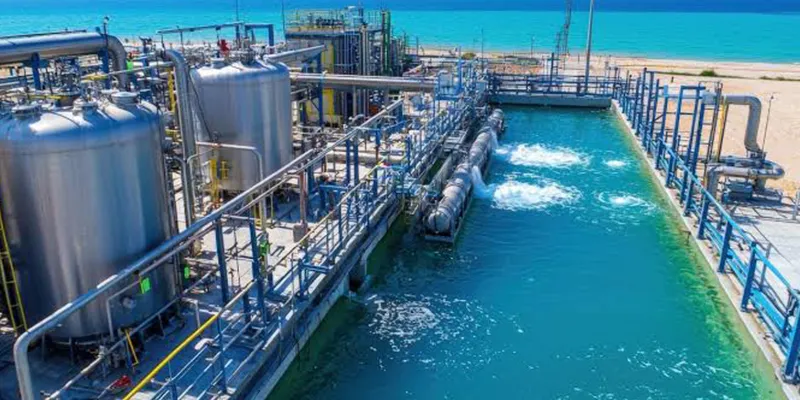
Anything wetted that combines chloride brine, CO2 and H2S at a pressure the alloy can carry: wellhead and Christmas-tree components, flowlines and gathering lines, manifolds, process piping, valve bodies and instrumentation tubing.
Upstream selection follows the fluid, not the drawing title. The same well can be sweet in the tubing and sour in the separator after pressure drop and water break-out, which is why material boundaries in a field development are drawn at process conditions rather than at equipment boundaries. The table below maps the common items to the product form and specification that govern them.
Table 6. Upstream equipment - product form and governing specification
Equipment | Typical product form | Governing specification |
|---|---|---|
Valve bodies, bonnets, clappers, wellhead forgings | Forgings and bars | ASTM A182 Grade F53; ASTM A276 for bar |
Christmas-tree and wellhead components | Forgings and wrought fittings | ASTM A182 F53 with API 6A requirements as applicable |
Flowline and gathering line pipe | Seamless or welded pipe | ASTM A790 (A790M); ASTM A928 for electric-fusion-welded |
Butt-weld fittings for flowlines | Wrought fittings | ASTM A815, matching A790 pipe systems |
Flanges and spectacle or spade hardware | Forgings and plate | ASTM A182 F53; ASME B16.5 / B16.48 dimensions |
Process piping on platforms | Seamless and welded pipe | ASME B31.3 design; ASTM A790 / A928 material |
Instrumentation and chemical-injection tubing | Welded or seamless tube | ASTM A789 tube; small-bore per project specification |
Manifold and subsea header forgings | Forgings and plate | ASTM A182 F53; ASTM A240 plate for clad sections |
Two items deserve a flag. First, high-strength cold-worked oilfield tubulars in 25Cr super duplex - the 110 and 125 ksi grades - are a different product regime governed by API 5CRA with its own qualification testing, not by the ASTM product specifications above. Second, S32750 is not a subsea-only alloy: it is routinely specified for topside process pipe where the fluid is aggressive, which is why the super duplex pipe fittings and forged fittings ranges matter as much as the pipe itself. For the structural marine exposure side - risers, splash zone, subsea frames - see the companion offshore applications article.
In the wet, sour, low-temperature circuits - amine and glycol systems, sour-water stripping, produced-water treatment - and nowhere near the hot units where its temperature ceiling applies.

Downstream of the wellhead the same selection logic runs, but the temperature ceiling becomes the binding constraint. S32750 is a low-temperature alloy: above about 316 C (600 F) continuous service it is not a candidate at all, because that is where sigma and chi intermetallic phases precipitate and destroy both toughness and local corrosion resistance. That excludes the hot end of every refinery - reforming, catalytic cracking, coking, hydrotreater reactors - and hands those duties to stabilised austenitics and nickel alloys.
Table 7. Gas processing and refining - where S32750 fits and where it does not
Unit / circuit | Suitability | Reason |
|---|---|---|
Amine and glycol contactors and regeneration circuits | Suitable | Wet H2S with amine and heat-stable salts at moderate temperature; duplex is a standard choice for lean-amine service |
Sour water strippers | Suitable with care | H2S, ammonia and water at moderate temperature; check chloride and pH against the envelope |
Produced-water treatment and reinjection | Suitable | Chloride-rich, oxygen-free, warm - the alloy's core strength |
Gas sweetening and dehydration internals | Suitable | Moderate temperature, wet sour conditions |
Sulphur recovery unit wet sections | Selective | Wet Claus sections acceptable; hot sections exceed the ceiling |
Hydrotreater and reformer circuits | Not suitable | Sustained temperatures above the 316 C ceiling drive sigma phase |
Catalytic cracking and coking | Not suitable | High temperature plus thermal cycling; select nickel alloys |
Flare tips and thermal relief | Not suitable | Thermal fatigue and temperatures well above the ceiling |
The pattern is consistent: wherever the process stays under roughly 150 C in sour service, or under about 316 C in general service, S32750 competes; above that it does not. When a sour circuit is also hot, the answer is Incoloy 825 up to its Code ceiling or Inconel 625 beyond it - the trade-off is set out in the 825 versus C276 sour-gas guide and Inconel 625 for offshore oil and gas.
S32750 takes the moderate envelope where cost matters; 825 takes the hotter version of the same duty; 625 and C276 take what is left - very high H2S, elemental sulphur, or hot sour service.
The four alloys are not competitors so much as a ladder, and the rung is chosen by how far the fluid sits outside the duplex envelope. The decision rule below is the one corrosion engineers actually apply, expressed in the order the variables are checked.
Start with 316L only if the service is genuinely sweet, low in chloride and cool - it is the cost baseline, not a sour-service candidate.
Step to duplex 2205 (S31803/S32205) for moderate sour windows and moderate chloride; it is the correct choice whenever the envelope allows, because it is cheaper.
Specify S32750 when the fluid combines sour gas with warm chloride brine and CO2, and stays inside the published envelope and under the temperature ceiling.
Step up to Incoloy 825 when the same duty runs hotter, or when the chemical envelope is broader than chloride and H2S alone - 825 tolerates more oxidising and acidic species and carries a much higher Code ceiling.
Use Inconel 625 or Hastelloy C276 when the H2S partial pressure is above the duplex envelope, when elemental sulphur is present, or when the service is hot as well as sour.
Table 8. Alloy division of labour in sour and chloride duty
Service condition | First choice | Notes |
|---|---|---|
Sweet, low chloride, under 60 C | 316L | Lowest cost; no sour-service regime applies |
Moderate sour, moderate chloride | Duplex 2205 | Cheapest qualified option when the envelope allows |
Sour plus warm chloride plus CO2 | S32750 | Roughly 5x the H2S tolerance of 2205; PREN ~42 |
Sour plus temperature above the duplex ceiling | Incoloy 825 | Code ceiling about 538 C; broad chemical envelope |
Very high H2S, elemental sulphur, hot sour | Inconel 625 / Hastelloy C276 | The residual duty; highest cost |
Strong reducing acids, HCl, HF-bearing streams | Hastelloy C276 / Monel 400 | Outside the stainless family entirely |
Two cross-cluster pages already on the site cover the nickel-alloy end of this ladder and are worth reading alongside this one: Incoloy 825 vs Hastelloy C276 for sour gas service and the best alloy for offshore oil and gas pipeline. If the project is at the pipe-selection stage rather than the alloy-selection stage, how to select nickel alloy pipe for offshore oil and gas covers the sizing and schedule logic.
A240 for plate, A790 and A928 for pipe, A789 for tube, A182 F53 for forgings and flanges, A276 for bar, and A403 or A815 for fittings - with the ASME SA equivalents for Code work.

The grade is only half of a correct order. The other half is the product-form specification, which controls the test frequency, heat-treatment verification and marking. Mixing them up - ordering plate to a pipe specification, or bar to a plate specification - produces a rejection at the mill or, worse, material that passes the wrong test regime.
Table 9. S32750 specification map by product form
Product form | ASTM specification | ASME Code equivalent | Notes |
|---|---|---|---|
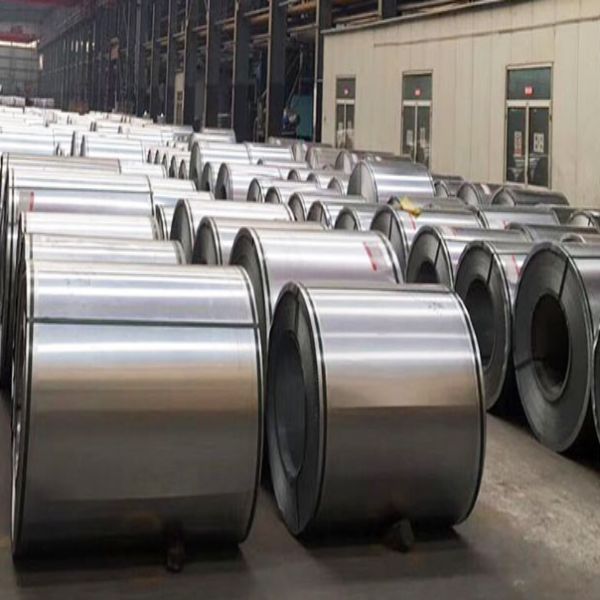
Plate, sheet and strip | ASTM A240 | SA-240 | Also covers clad plate and strip for vessel cladding |
Seamless and welded pipe | ASTM A790 / A790M | SA-790 | General corrosive service; NPS 1/8 to NPS 30 |
Electric-fusion-welded pipe | ASTM A928 | SA-928 | Larger diameters and heavier walls |
Welded and seamless tube | ASTM A789 | SA-789 | Heat exchanger, condenser and instrumentation tube |
Forgings and flanges | ASTM A182 Grade F53 | SA-182 F53 | Valve bodies, bonnets, wellhead forgings |
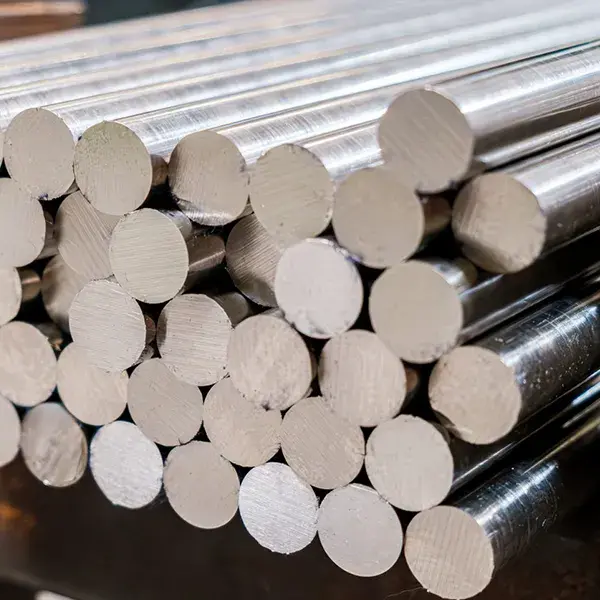
Bar and rod | ASTM A276 | SA-276 | Round, flat and hexagon bar |
Butt-weld fittings | ASTM A815 | - | Matches A790 pipe systems; commonly ordered with NACE supplementary requirements |
Wrought fittings | ASTM A403 WP53 | - | Elbows, tees, reducers for welded construction |
Wall thickness and schedule are a separate question again: duplex pipe to ASME B36.19M schedules is covered in the B36.19 pipe dimension, wall thickness and weight reference. Plate buyers should read the plate buying guide for the surface and flatness clauses that matter to fabrication. For the grade designation logic itself - what F53, 1.4410 and SAF 2507 have in common - the F53 vs F55 comparison and what is super duplex S32750 spokes explain the numbering.
Because allowable stress scales with yield, so the same pressure and diameter can be carried on a materially thinner wall - which is weight, cost and weld metal saved on every joint.
ASME B31.3 Table A-1 lists the ambient allowable stress for S32750 at about 38.7 ksi (267 MPa), against about 16.7 ksi (115 MPa) for F316L and 30 ksi for standard duplex S31803. That is a factor of roughly 2.3 over 316L on the number that actually governs pipe wall thickness, and it comes from the specified minimum yield strength of 550 MPa (80 ksi) - approximately twice the 205 MPa typical of annealed 316L. Note that the 316L allowable is lower than its yield would suggest because B31.3 takes two-thirds of the specified minimum yield and 316L is supplied to a deliberately low yield; the duplex grades get the same two-thirds treatment from a much higher starting point.
Table 10. Strength and density - the numbers that drive wall thickness
Grade | Min 0.2% proof (MPa) | Min tensile (MPa) | B31.3 ambient allowable (ksi) | Density (g/cm3) |
|---|---|---|---|---|
316L (UNS S31603) | 170 | 485 | 16.7 | 8.00 |
Duplex 2205 (S32205) | 450 | 620 | 30.0 | 7.80 |
Super duplex S32750 | 550 | 800 | 38.7 | 7.80 |
Inconel 625 (N06625) | 350 | 827 | 40.0 | 8.44 |
Three consequences follow. First, wall thickness can drop substantially for the same design pressure and diameter, which on a topside pipe rack is weight and support steel saved. Second, thinner walls mean shorter weld times and less filler metal per joint, partly offsetting the higher material cost per kilogram. Third - and this is the counter-intuitive part - the strength advantage shrinks as temperature rises, because the duplex grades lose allowable stress faster than nickel alloys do. The higher allowable is an ambient and moderate-temperature advantage, not a universal one. The derivation approach and the temperature behaviour are set out in S32750 mechanical properties.
About 316 C (600 F) in general service as an absolute ceiling, and typically nearer 150 C inside the sour-service envelope.

There are two temperature limits and they are routinely confused. The metallurgical ceiling is set by intermetallic phase precipitation: sigma and chi phases form during slow cooling or long exposure through roughly 600-950 C, and the 475 C embrittlement range sits just below it. Both consume chromium and molybdenum from the matrix and degrade impact toughness and local corrosion resistance together. In practice that puts the continuous-service ceiling near 316 C, and it is the reason the alloy is delivered solution annealed and water quenched.
The sour-service ceiling is a different, tighter number, because hydrogen-assisted cracking becomes more likely as temperature rises within the qualified matrix. Published envelope rows commonly cap sour duty near 150 C, with the most permissive rows reaching toward 232 C only when H2S partial pressure and chloride are both low. An oilfield engineer should treat 150 C as the working planning figure for sour service and confirm the actual row against the governing edition.
Table 11. The three temperature limits that get confused
Limit | Value | What it governs |
|---|---|---|
Metallurgical service ceiling | about 316 C (600 F) | Continuous general service; above this, sigma and chi phases precipitate |
Sour-service envelope cap | commonly near 150 C, most permissive rows toward 232 C | SSC resistance inside the NACE / ISO matrix; project-specific |
Solution anneal temperature | 1025-1125 C followed by water quench | The mill delivery condition that dissolves secondary phases |
475 C embrittlement range | roughly 400-550 C | Intermediate-temperature exposure during welding or fire events |
Impact toughness falls sharply below about -50 C, so the alloy is not a cryogenic material - use 304L, 316L or Inconel 625 for LNG-temperature duty.
Duplex stainless steels have no ductile-brittle transition in the austenitic sense, but the ferrite phase does carry a transition, and S32750 shows a marked drop in impact energy as temperature falls below about -50 C. Arctic pipelines, LNG trains and turbo-expander circuits are therefore outside the grade's comfortable range even though the corrosion environment would suit it.
For subsea and high-pressure gas service where both low temperature and sour conditions appear together, Inconel 625 is the standard answer - the Inconel 625 pipe shipment and LNG case-study pages on this site illustrate that duty.
With a matched over-alloyed filler, controlled heat input and interpass temperature, argon root purge, and no post-weld heat treatment - or a full solution anneal where the as-welded procedure cannot demonstrate compliance.
Welding is where sour-service compliance is most often lost, because the 28 HRC hardness cap and the 35-65 percent ferrite window apply to the weld metal and heat-affected zone as well as the parent plate. A procedure that produces the right tensile properties but runs hot enough to precipitate sigma in the HAZ has produced a joint that is outside the listing no matter how sound it looks on radiography.
Table 12. Welding S32750 for sour service
Parameter | Practice | Why |
|---|---|---|
Filler metal | ER 2594 class per AWS A5.9, typically over-matched for corrosion-critical joints | Restores the Cr-Mo-N balance consumed by welding |
Heat input | Kept low and within the qualified WPS range | High heat input drives sigma and chi precipitation |
Interpass temperature | Controlled, commonly held near or below 150 C | Limits time in the precipitation range |
Root purge | Argon, target roughly 25-50 ppm oxygen at the vent | Prevents root oxidation and loss of corrosion resistance; nitrogen is prohibited for duplex |
Post-weld heat treatment | None - stress relief is not applied to duplex | Any PWHT cycle sits inside the embrittlement range |
Where the WPS cannot demonstrate compliance | Full solution anneal about 1040-1100 C followed by quench | Restores the balanced microstructure the listing requires |
Weld surface | Heat tint and oxides removed by brushing, pickling or light grinding | Chromium-depleted oxide becomes a pitting initiation site |
Purge quality is verified with a calibrated oxygen analyser at the vent, not by counting volume exchanges - a planning number, not a release criterion. The cross-cluster Hastelloy C276 welding guide and the Inconel 625 welding guide cover the same discipline from the nickel-alloy side. Prefabrication economics - shop versus field welding for duplex - are set out in the prefabrication cost comparison.
An EN 10204 3.1 mill certificate plus hardness survey, ferrite count, ASTM A923 phase check and a NACE MR0175 / ISO 15156-3 compliance statement written into the order - PMI alone proves nothing about phase balance.

Traceability for sour-service duplex has a specific gap that catches buyers: positive material identification by XRF confirms the alloying elements, but it cannot measure the ferrite-to-austenite ratio, and it cannot see intermetallic phases. A heat can be chemically perfect and metallurgically unacceptable if it was cooled too slowly. The certificate package below closes that gap.
Table 13. Sour-service certification package
Document / test | Method or standard | What it proves |
|---|---|---|
Mill test certificate | EN 10204 Type 3.1 (Type 3.2 where third-party witnessed) | Heat chemistry and mechanicals against the ASTM product specification |
Hardness survey | ASTM E18 / ISO 6508 | 28 HRC maximum across base metal, weld and HAZ |
Ferrite content | ASTM E562 point count, or magnetic method | The 35-65 percent phase balance window |
Intermetallic phase screen | ASTM A923 Method A or B | Absence of sigma, chi and nitride phases |
PMI verification | XRF or OES per project specification | Alloy identity - necessary but not sufficient |
Heat-treatment record | Mill certificate entry | Solution anneal and quench actually performed |
Sour-service statement | NACE MR0175 / ISO 15156-3 on the purchase order and certificate | That the general-service material is being supplied to the sour regime |
Practical sequence for a buyer: put NACE MR0175 / ISO 15156-3 compliance in the purchase order before asking for a quotation, state the governing edition, and require the hardness, ferrite and A923 results on the certificate rather than on request. Retrofitting the requirement after delivery means rejecting material that is technically within the ASTM specification but outside the sour listing - the most expensive way to learn the difference between 32 HRC and 28 HRC.
Above the H2S envelope, in the presence of elemental sulphur, above the temperature ceiling, below about -50 C, and in strong reducing acids - each failure has a defined replacement.
A selection guide that only says where an alloy works is marketing. The table below is the honest list of exclusions, each paired with the alloy that takes over. Every one of these failure modes has been encountered in real fields; none of them are theoretical.
Table 14. Where not to use S32750 in oil and gas
Condition | What happens | Specify instead |
|---|---|---|
H2S partial pressure above the published envelope | Sulphide stress cracking of base metal or weld | Inconel 625 or Hastelloy C276 |
Elemental sulphur in the produced fluid | Excluded from the duplex envelope; aggressive attack | Nickel alloy - 625 or C276 |
Sustained temperature above about 316 C | Sigma and chi precipitation; toughness and corrosion loss | Incoloy 825 or Inconel 625 |
Service below about -50 C | Impact toughness falls sharply | 304L, 316L or Inconel 625 |
Strong reducing acids, concentrated HCl | General corrosion beyond the stainless family | Hastelloy C276; Monel 400 for HF-bearing streams |
High-strength cold-worked oilfield tubulars | Cold work removes the sour listing | API 5CRA route with its own qualification |
Sweet, dry, low-chloride service | No failure - just wasted money | Carbon steel with a corrosion allowance, or 316L |
The last row matters as much as the others. Over-specification is a real and common error: buying S32750 for a sweet gas line costs several times more than 316L and buys nothing. The correct discipline is to run the four-variable screen, confirm the alloy is needed, and only then check price. Where S32750 is genuinely required, the S32750 product page and the duplex steel pipe range cover the deliverable forms.
Screen the fluid, compute partial pressure, read the envelope row by row, pick the product form and specification, then write the sour-service conditions into the order before the quotation.
The seven-step sequence below is the one that keeps a sour-service project out of trouble. Steps one to three are engineering judgement; steps four to seven are procurement discipline.
Screen the produced fluid. Record H2S and CO2 content, chloride concentration, in-situ pH, elemental sulphur and design temperature for every wetted circuit - not just the wellhead. The same well can change regime downstream of the separator.
Compute the H2S partial pressure. Multiply mol percent H2S by total absolute pressure. Compare against the 0.05 psia (about 0.0035 bar) sweet/sour threshold; at or above it the sour-service regime applies.
Read the envelope row by row. Plot the four variables against the current edition of NACE MR0175 / ISO 15156-3 using the material selection diagram. Do not accept a single quoted limit - the envelope is a matrix, and the governing edition is the one in the end user's specification.
Select the product form and specification. Match each item to Table 9: A240 plate, A790 or A928 pipe, A789 tube, A182 F53 forgings, A276 bar, A815 or A403 fittings. Add ASME B31.3 for design and B36.19M for wall schedules.
Write the sour-service conditions into the order. State NACE MR0175 / ISO 15156-3 compliance with the governing edition, 28 HRC maximum hardness, 35-65 percent ferrite and ASTM A923 phase testing - before requesting a quotation, not after delivery.
Specify the welding regime. Qualify the WPS to hold phase balance, hardness and corrosion resistance as-welded: matched filler (typically ER 2594), controlled heat input and interpass temperature, argon root purge to roughly 25-50 ppm oxygen, no post-weld heat treatment.
Require the full certification package. EN 10204 3.1 mill certificate, hardness survey per ASTM E18 / ISO 6508, ferrite count per ASTM E562, ASTM A923 phase screen, PMI verification and the heat-treatment record. PMI alone does not prove phase balance.
Table 15. Quick reference - S32750 oil and gas at a glance
Item | Value |
|---|---|
Grade designations | UNS S32750, SAF 2507, EN 1.4410, F53 (ASME), 022Cr25Ni7Mo4N (GB) |
PREN | about 42 (Cr + 3.3 x Mo + 16 x N) |
Min 0.2% proof / tensile | 550 MPa (80 ksi) / 800 MPa (116 ksi) |
Sour hardness cap | 28 HRC maximum (base, weld and HAZ); ASTM product specs allow 32 HRC for general service |
Ferrite window | 35-65 percent per ASTM E562 |
Delivery condition | Solution annealed 1025-1125 C, water quenched |
Sour-service temperature | commonly near 150 C; verify row by row against the governing edition |
General service ceiling | about 316 C (600 F) |
Low-temperature limit | about -50 C for impact toughness |
Typical filler | ER 2594 per AWS A5.9 |
Key specs | A240 plate, A790 / A928 pipe, A789 tube, A182 F53 forgings, A276 bar, A815 / A403 fittings |
Is S32750 suitable for sour gas service?
Yes, within a defined envelope. NACE MR0175 / ISO 15156-3 qualifies UNS S32750 for sour service provided it is solution annealed and water quenched, held at 28 HRC maximum, kept within a 35-65 percent ferrite window, and welded by a qualified procedure. The environmental limits - H2S partial pressure, chloride, pH and temperature - must be read row by row against the governing edition, not lifted from a single headline figure. See S32750 corrosion resistance for the underlying mechanisms.
What is the hardness limit for S32750 in sour service?
28 HRC maximum, and the limit applies to base metal, weld metal and the heat-affected zone. This is deliberately tighter than the 32 HRC permitted by the ASTM product specifications for general service. Mill heats supplied solution annealed typically test at 22-26 HRC, so compliant material is comfortable - but the requirement must be written into the purchase order.
What ferrite content does S32750 need for sour service?
Between 35 and 65 percent, measured by ASTM E562 metallographic point count or an equivalent magnetic method. The window covers both parent metal and weld metal. Ferrite content cannot be verified by XRF PMI, which is why a metallographic or magnetic measurement is required on the certificate.
What is the maximum H2S partial pressure for S32750?
There is no single number - the envelope is a matrix. Commonly published summaries give about 1.5 psi (10 kPa) at pH 3.5 and above with chloride to about 5 percent and temperature near 150 C, while other summaries quote up to 100 kPa at lower temperature and chloride. Both quote the standard; they quote different rows. Verify the specific combination against the current edition using the material selection diagram.
At what point does a well become sour?
At an H2S partial pressure of 0.05 psia (about 0.0003 MPa or 0.0035 bar), per NACE MR0175 / ISO 15156-1. Partial pressure is mol percent H2S multiplied by total absolute pressure, so the same gas can be sour in a high-pressure separator and sweet in a low-pressure sales line.
Can S32750 be used for production tubing?
Not through the ASTM product route. High-strength cold-worked 25Cr super duplex oilfield tubulars are a separate product regime governed by API 5CRA, with its own qualification testing, because heavy cold work removes the NACE sour-service listing. Standard solution-annealed duplex tube is used for other oilfield tubular duties.
Which ASTM specification covers S32750 pipe?
ASTM A790 / A790M for seamless and welded pipe, and ASTM A928 for electric-fusion-welded pipe in larger diameters. Plate is ASTM A240, tube is ASTM A789, forgings and flanges are ASTM A182 Grade F53, bar is ASTM A276, and fittings are ASTM A815 or A403 WP53. For Code work use the ASME SA equivalents.
What is the maximum service temperature for S32750?
About 316 C (600 F) in general service, set by sigma and chi phase precipitation, and commonly nearer 150 C inside the sour-service envelope. Above the metallurgical ceiling the alloy loses both impact toughness and local corrosion resistance, so hot refinery units are Incoloy 825 or Inconel 625 duty.
What filler metal should be used to weld S32750?
An ER 2594 class filler per AWS A5.9, typically over-matched for corrosion-critical joints. Heat input and interpass temperature must stay within the qualified WPS range, the root must be purged with argon to roughly 25-50 ppm oxygen, and no post-weld heat treatment is applied - any stress-relief cycle sits inside the embrittlement range.
Does S32750 need post-weld annealing?
Only where the as-welded WPS cannot demonstrate compliance. In that case a full solution anneal at about 1040-1100 C followed by quenching is used to restore the balanced microstructure. Routine post-weld heat treatment is never applied to duplex steels because the cycle would precipitate sigma phase.
Can S32750 be used for subsea flowlines?
Yes, and it is a standard choice for subsea flowlines, manifolds and jumpers where the fluid is within the sour-service envelope and the temperature is moderate. The marine exposure side - splash zone, risers and external surfaces - is covered in the offshore applications of S32750 article.
How does S32750 compare with Inconel 825 in sour service?
S32750 wins on strength and cost inside its envelope, with roughly twice the yield strength of 825 and a PREN of about 42 against about 32. Incoloy 825 wins when the duty is hotter, when the chemical envelope is broader than chloride and H2S alone, or when the H2S partial pressure is above the duplex matrix. The trade-off is set out in Incoloy 825 vs Hastelloy C276 for sour gas service.
Is duplex 2205 good enough instead, to save cost?
Whenever the envelope allows, yes - 2205 is the correct choice for moderate sour windows and moderate chloride, and it is cheaper. The step up to S32750 buys roughly five times the H2S tolerance and a substantially wider chloride window, which is what justifies the premium. See S32750 vs duplex 2205 for the boundary.
What happens if elemental sulphur is present?
Elemental sulphur is excluded from the duplex sour-service envelopes entirely. Its presence moves the selection to a nickel alloy - Inconel 625 or Hastelloy C276 - regardless of the other fluid variables. This is one of the few absolute exclusions in the standard.
What certification package should I require?
An EN 10204 3.1 mill test certificate, a hardness survey per ASTM E18 / ISO 6508, a ferrite count per ASTM E562, an ASTM A923 intermetallic phase screen, PMI verification and the heat-treatment record - plus a NACE MR0175 / ISO 15156-3 compliance statement naming the governing edition on both the purchase order and the certificate.
What hardness does S32750 test at as supplied?
Mill heats supplied solution annealed and water quenched typically test at 22-26 HRC, comfortably below the 28 HRC sour-service cap and well below the 32 HRC permitted by the ASTM product specifications. Hardness above the sour-service limit usually means cold work or an incorrect heat treatment.
Is S32750 suitable for CO2-rich gas without H2S?
Usually it is unnecessary rather than unsuitable. Sweet CO2 service with low chloride is commonly handled by carbon steel with a corrosion allowance or by 316L. S32750 becomes the right choice when CO2 corrosion combines with warm chloride brine, and it becomes mandatory once the H2S threshold is crossed.
Can S32750 be used for wellhead and Christmas-tree components?
Yes. Forged bodies, bonnets and gate components are supplied to ASTM A182 Grade F53, with API 6A requirements applied where the project specifies them, and with the sour-service hardness and phase conditions added on top. An F53 weld-neck flange shipment to Argentina is documented in the F53 flange case study.
What is the low-temperature limit for S32750?
Impact toughness falls sharply below about -50 C, so the grade is not a cryogenic material. Arctic pipelines, LNG trains and turbo-expander circuits should use 304L, 316L or Inconel 625 instead.
Why does S32750 matter so much for offshore weight?
Because ASME B31.3 Table A-1 lists its ambient allowable stress at about 38.7 ksi, against 16.7 ksi for F316L - a factor of about 2.3 on the number that governs wall thickness. The same pressure and diameter can be carried on a thinner wall, saving weight, support steel and weld metal on every joint. The advantage narrows as temperature rises, so it is strongest at ambient and moderate temperature.


